AI Sales Prospecting & Lead Enrichment Tools: Top 12 for 2026
The definitive 2026 guide to AI sales prospecting and lead enrichment tools. Compare Clay, Apollo, ZoomInfo, Cognism, Cleanlist, and more — with a buyer's framework, data-quality guide, and vendor-evidence notes.
Last updated: August 2026 · Reviewed quarterly by the LineZine editorial team
An AI sales prospecting tool in 2026 is no longer just a database with a Chrome extension. The category has split into three overlapping layers: enrichment platforms that waterfall across dozens of data providers to maximise match rates, AI research agents that investigate prospects the way a junior SDR would, and signal-intelligence engines that tell you who's in market before they fill out a form. The best modern stacks combine all three — and the tools at the top of this list are the ones that have figured out how.
This guide covers the tool landscape, what AI-assisted prospecting actually does well versus what still requires human judgment, the data-quality questions that separate credible tools from well-marketed databases, and a buyer's framework for matching a platform to your team. It's written for sales leaders, RevOps practitioners, and GTM engineers evaluating their 2026 stack — whether you're a two-person startup or a 500-rep enterprise team.
For the broader lead generation picture beyond enrichment and prospecting, see our guide to AI-powered lead generation tools.
TL;DR — top picks for 2026:
- Best for flexible enrichment & AI workflows: Clay — waterfall enrichment across 100+ providers plus Claygent AI research agent
- Best all-in-one for SMBs: Apollo.io — database + AI scoring + sequences + dialer in one platform
- Best for enterprise signals & intelligence: ZoomInfo Copilot — scale, intent data, org charts, and headless agent integrations
- Best for EMEA & phone-verified data: Cognism — Diamond Data human-verified mobiles with strong GDPR posture
What is an AI sales prospecting and lead enrichment tool?
An AI sales prospecting tool is software that uses machine learning — typically large language models combined with data-enrichment pipelines and signal-detection systems — to handle the research-heavy parts of outbound sales: finding the right accounts, identifying the right contacts, enriching them with accurate data, surfacing buying signals, and drafting context-rich outreach.
The "AI" part is not a thin wrapper over a static database. A genuine AI prospecting tool in 2026 does at least three of the following: enriches contact records by querying multiple data sources in sequence until it finds a match (waterfall enrichment), uses an AI agent to research a prospect's recent funding, job changes, tech stack, or content, surfaces intent signals that indicate when an account is actively evaluating solutions, or drafts personalised outreach snippets grounded in the enriched data rather than spray-and-pray templates. Tools that only provide email addresses and job titles from a single database are contact databases — useful, but not what buyers mean when they search for an AI prospecting platform.
Evidence note: Unless otherwise stated, database sizes, accuracy percentages, and coverage claims in this guide are vendor-reported and may vary by geography, persona, industry, and plan. Where we reference independent benchmarks or test results, we say so explicitly.
The most popular AI sales prospecting tools in 2026
This is the practical shortlist. We've ranked these by a combination of market adoption in sales and RevOps teams specifically, depth of AI capabilities tied to prospecting rather than generic sales automation, and independent review volume from the past 12 months. Each entry covers what it's best for, the AI capabilities that matter, and the pricing tier — so you can rule things out fast.
1. Clay
Best for flexible, AI-driven enrichment and custom prospecting workflows.
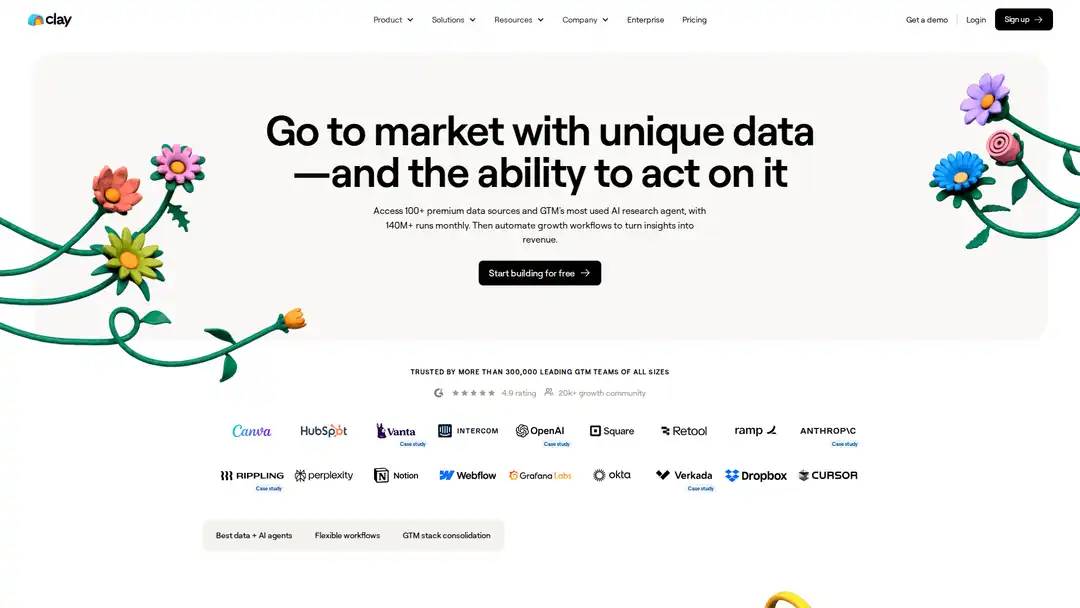
Clay is the platform that turned waterfall enrichment into a category. Instead of relying on one database, Clay queries 100+ data providers sequentially — each one filling gaps the previous one left — and lets you build enrichment logic in a spreadsheet-style interface. The killer feature in 2026 is Claygent, an AI research agent that investigates individual prospects: finding recent funding announcements, job changes, tech-stack signals, conference appearances, and content interests, then distilling them into personalisation snippets.
Clay is not a database and not an outreach sequencer. It's an enrichment orchestration and research platform — it pulls data from everywhere else, enriches it with AI, and feeds it into your CRM, sequencer, or data warehouse.
Best for: RevOps and GTM engineers who want programmable, high-coverage data rather than a static database. Teams that need custom enrichment logic — scoring, routing, signal tracking — rather than a one-size-fits-all contact list.
AI capabilities: Claygent AI research agent, AI formulas and columns for custom enrichment logic, waterfall enrichment across 100+ providers, job-change and signal tracking, personalisation snippet generation.
Pricing: Free tier available. Paid plans start around $149–$185/month (Launch tier), scaling with credits and actions. Pricing checked: August 2026. Credit consumption varies significantly by workflow complexity — effective cost can be hard to estimate without a pilot.
Cons: Steeper learning curve than all-in-one platforms. No native outreach sequencer in the core product (integrates with outbound tools). Flexibility can increase operational complexity — benefits from RevOps or technical expertise.
2. Apollo.io
Best all-in-one prospecting platform for SMBs and growth-stage teams.
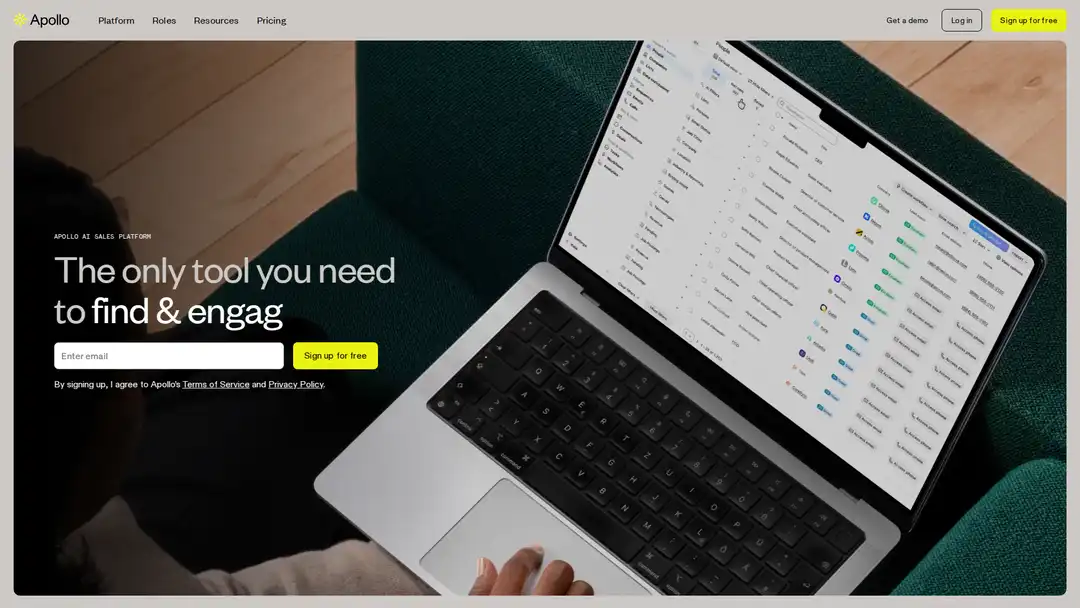
Apollo.io combines a large proprietary database with AI scoring, enrichment, sequences, and a built-in dialer — the closest thing to a one-stop shop in the category. The free tier is genuinely useful (not a 14-day trial dressed up as freemium), which makes it the default starting point for most small teams and a common anchor in larger stacks.
The AI Assistant (released in early 2026) adds scoring and research capabilities on top of the database, and the intent and technographic filters help narrow a broad contact pool to accounts that actually fit an ICP. Apollo's strength isn't that it does any one thing better than everyone else — it's that it does enough of everything in one place.
Best for: SMBs and growth-stage teams that want database + AI + light engagement in one platform without stitching together three tools. Also serves as the core database layer in larger stacks paired with Clay for deeper enrichment.
AI capabilities: AI Assistant for scoring and research, AI-powered lead scoring, enrichment, intent and technographic filters, sequences, and dialer.
Pricing: Free tier available. Paid from ~$49/user/month (Basic), higher for Professional and Organization tiers. Pricing checked: August 2026. Database size is vendor-reported (commonly cited as 230–275M+ contacts); list size does not guarantee coverage or accuracy for a specific ICP. Verify deliverability before relying on the built-in sequencer for high-volume outbound.
3. ZoomInfo (Copilot + GTM.AI)
Best for enterprise-scale intelligence, signals, and agent-ready data.
ZoomInfo remains the enterprise default for a reason: its database is the largest verified B2B contact set, its intent and scoop data surfaces accounts actively in-market, and its org-chart mapping is the most complete in the category. The newer Copilot product layers AI on top — surfacing prioritised accounts, next-best-action recommendations, account summaries, and AI-drafted outreach that pulls from both first-party CRM data and ZoomInfo's third-party intelligence.
GTM.AI, ZoomInfo's headless intelligence layer, is the 2026 development that matters most for technical teams: it exposes ZoomInfo data through an API and MCP server, making it queryable by AI agents in Claude, ChatGPT, Microsoft Copilot, Salesforce Agentforce, and HubSpot Breeze. This means your existing AI tools can reason over ZoomInfo data without a human pulling reports.
Best for: Larger organisations that value broad account intelligence, buying signals, organisational data, and enterprise integrations — and can support a sales-led contract.
AI capabilities: Copilot for account prioritisation and AI-drafted outreach, GTM.AI headless intelligence layer (API/MCP), intent and scoop signals, org-chart mapping, deep CRM integration.
Pricing: Custom-priced, sales-led. Enterprise contracts typically start in the mid-five figures annually and scale significantly with seats, modules, and usage. Pricing checked: August 2026. Verify current product names, availability (general vs. limited), and specific integration status before committing — ZoomInfo's product surface evolves quickly.
4. Cognism
Best for European/EMEA coverage and phone-verified contact data.
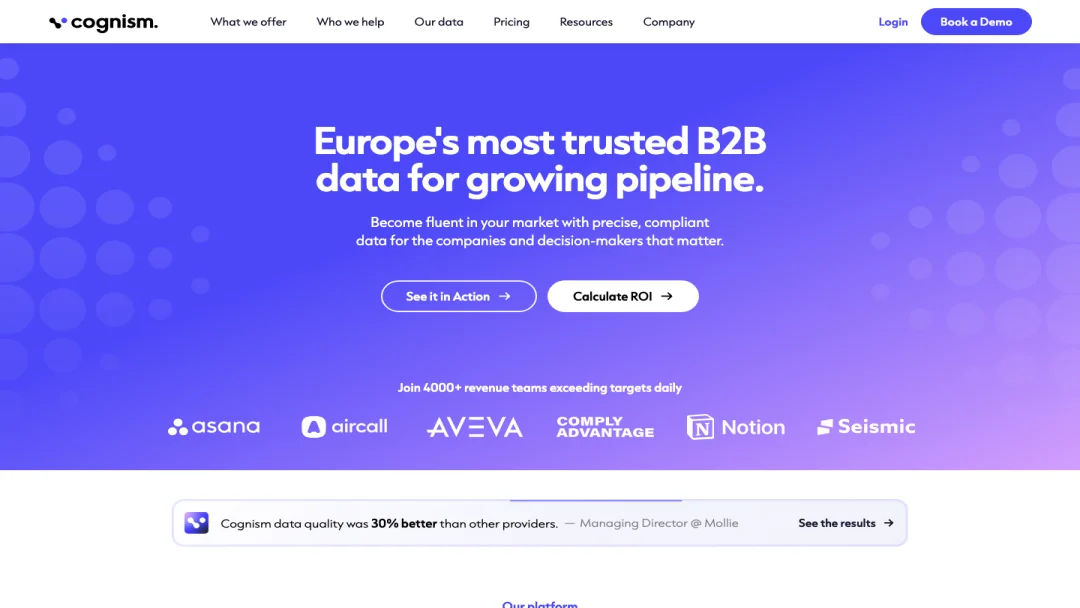
Cognism is the go-to when the ICP is concentrated in Europe and phone connectivity matters more than email volume. The differentiator is Diamond Data — Cognism's term for contacts whose mobile numbers have been human-verified rather than algorithmically matched — which consistently produces higher connect rates in EMEA markets than US-centric alternatives.
The compliance posture is stronger than most: GDPR-aware by design, with suppression handling, lawful-basis documentation, and regional data controls that matter for teams operating across multiple European jurisdictions. The AI search and research layer (Cortex AI) adds natural-language querying and intent detection on top of the core database.
Best for: Teams whose ICP is heavily European, phone-first sales motions, and companies that need compliance documentation beyond a checkbox on a pricing page.
AI capabilities: Cortex AI search and research, Diamond Data human-verified mobiles, intent detection, GDPR-aware enrichment, firmographic and technographic filters.
Pricing: Sales-led annual contracts. Reported ranges typically $15,000–$40,000+/year depending on seats, tier (Standard/Grow vs. Pro/Elevate), and Diamond Data volume. No free or self-serve tier. Pricing checked: August 2026. Mobile coverage and connect rates vary by country and seniority — run a pilot on your actual ICP. GDPR compliance is not a vendor feature; buyers still need their own lawful basis, notices, and suppression procedures.
5. Cleanlist
Rising accuracy-focused option — waterfall enrichment plus AI research at accessible pricing.
Cleanlist is a newer entrant that has gained traction in 2026 by combining waterfall enrichment across 15+ providers with AI-powered research columns and a natural-language list builder (Copilot). The value proposition is simple: multi-source enrichment with claimed high accuracy, at per-credit pricing without per-seat fees.
Early user feedback on enrichment quality is positive, and the AI columns — which let you research arbitrary fields per contact — are a genuine differentiator at this price point. The platform is credit-based with a free tier for testing, and paid plans start at an accessible $59–$79/month.
Best for: Teams that want waterfall enrichment and AI-assisted research without the Clay learning curve or the enterprise price tags, and are willing to validate performance on their own ICP.
AI capabilities: Waterfall enrichment across 15+ providers, AI columns for researching arbitrary fields per contact, Copilot for natural-language list building and research, CRM sync, import from CSV/LinkedIn.
Pricing: Free tier (limited credits). Paid from ~$59–$79/month (Starter), credit-based with no per-seat fees. Pricing checked: August 2026. Cleanlist is a promising newer option rather than an established leader — the strongest published accuracy results are vendor-reported, and independent third-party review volume is smaller than Clay, Apollo, or ZoomInfo. Validate against your own ICP before an annual commitment.
6. Lusha
Best for quick individual lookups and lightweight enrichment.
Lusha is the tool you install when a rep needs to pull a phone number and email from a LinkedIn profile in five seconds. It's not a full prospecting platform — it's a contact-reveal tool that works in the browser, and it's excellent at that narrow job. The free tier covers casual use; paid plans unlock more reveals and bulk enrichment.
Best for: Individual reps who need quick contact lookups, teams that want lightweight enrichment alongside a primary prospecting platform.
AI capabilities: Contact reveal, browser extension, basic enrichment.
Pricing: Free tier. Paid from ~$29–$49/user/month. Pricing checked: August 2026.
7. Seamless.AI
Real-time search and enrichment with a large contact database.
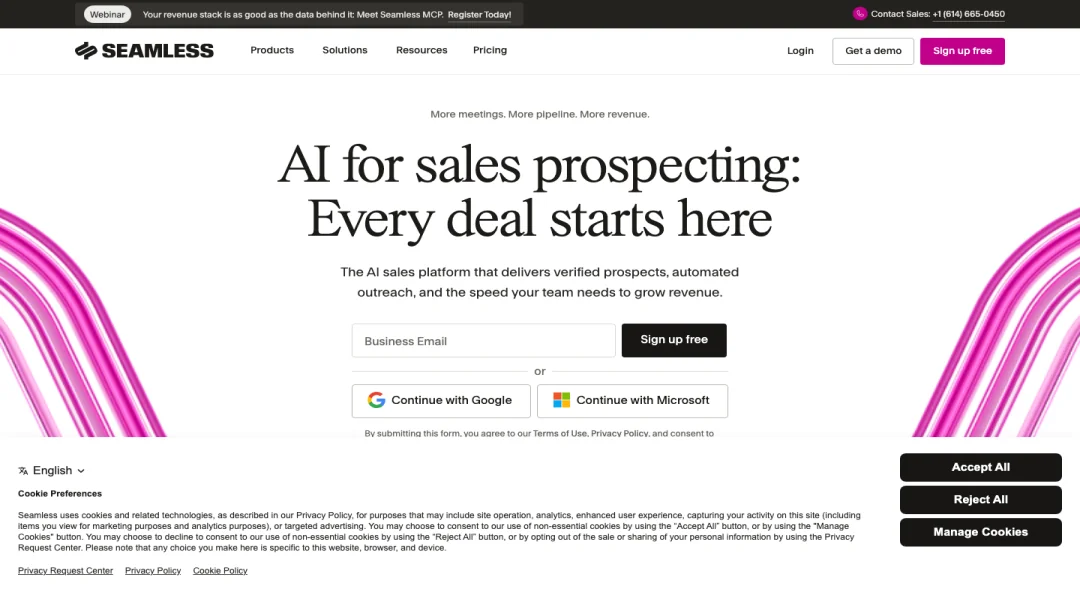
Seamless.AI pitches real-time search — the idea that contact data is found and verified at the moment of search rather than served from a pre-built database. In practice, this means higher freshness on some records and more variance in coverage depending on the search target. It's best evaluated against Apollo.io and Lusha for the "all-in-one database plus light engagement" use case.
Best for: Teams that prioritise real-time verification and want a database-first prospecting platform with built-in search.
AI capabilities: Real-time contact search and verification, enrichment, list building.
Pricing: Freemium model with paid tiers. Pricing checked: August 2026. Independently test email and phone accuracy, freshness, and export limits before committing. "Real-time" describes the search method, not a guarantee of accuracy.
8. UpLead
Real-time verification on export with accuracy guarantees.
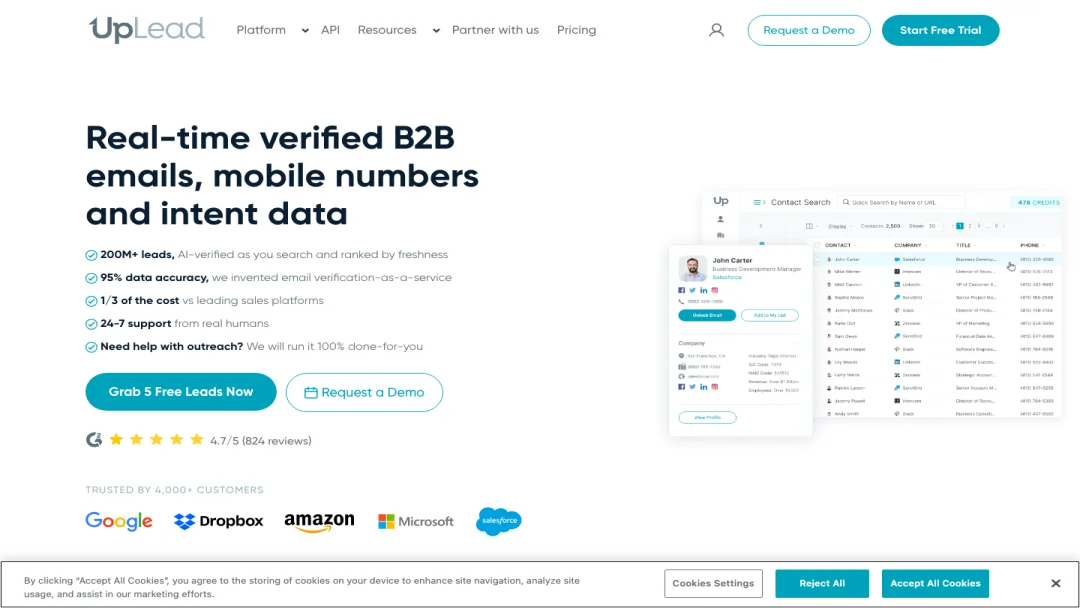
UpLead differentiates on verification: contacts are verified at the point of export rather than stored pre-verified, and some plans include an accuracy guarantee with refunds on bounces. For budget-conscious teams that need verified data without an enterprise contract, it's a solid mid-tier option.
Best for: Teams that prioritise verified data on a budget and want accuracy guarantees.
AI capabilities: Real-time verification, list building, technographic and firmographic filters.
Pricing: Tiered plans, budget-friendly relative to enterprise platforms. Pricing checked: August 2026. Verify the current terms of the accuracy guarantee — conditions, refund caps, and which data fields are covered.
9. HubSpot Breeze Intelligence
CRM-native enrichment and buyer-intent signals for HubSpot users.
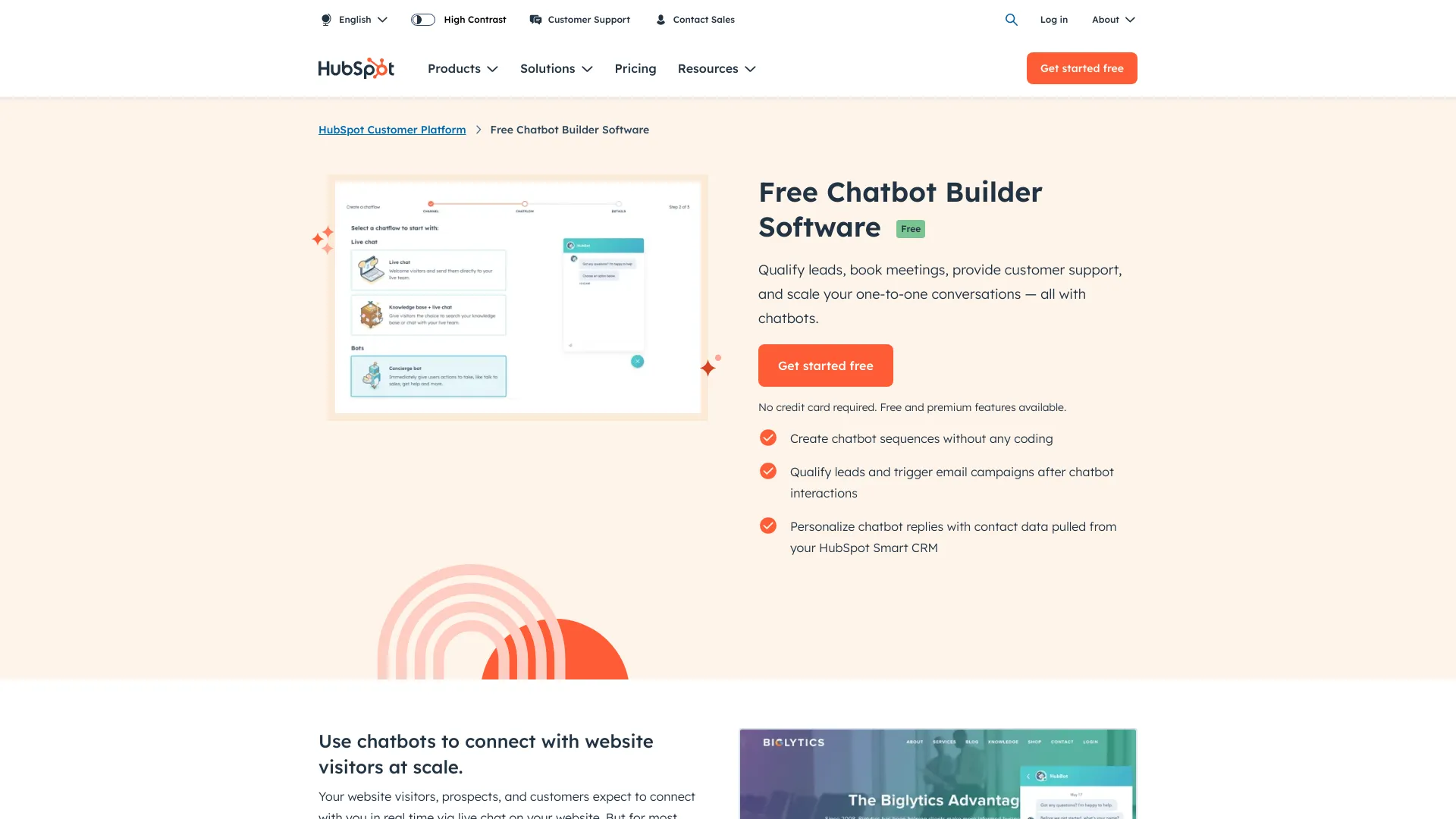
Breeze Intelligence is HubSpot's AI enrichment layer, built on the Clearbit acquisition. For teams already running their CRM on HubSpot, it's the path of least resistance: enrichment, intent signals, and company intelligence all flow directly into existing records without integration work. It's not a standalone prospecting platform — it's CRM-native intelligence that makes your existing HubSpot data better.
Best for: HubSpot-native teams that want enrichment and intent signals without leaving their CRM.
AI capabilities: CRM-native data enrichment, buyer-intent signals, company intelligence, automated data population.
Pricing: Included or add-on depending on HubSpot tier. Pricing checked: August 2026.
10. LeadIQ
LinkedIn-centric prospect capture and sales workflow integration.
LeadIQ is optimised for the LinkedIn-to-CRM pipeline: capture prospects from LinkedIn and Sales Navigator, enrich them, and push them into your sales engagement platform. It's the right pick when LinkedIn is the primary prospecting surface and the browser-to-CRM handoff is where time gets lost.
Best for: Teams whose primary prospecting surface is LinkedIn and who need seamless CRM integration from the browser.
AI capabilities: LinkedIn prospect capture, enrichment, CRM integration, sales engagement handoff.
Pricing: Tiered per-user plans. Pricing checked: August 2026.
11. 6sense
Enterprise account intelligence and predictive intent.
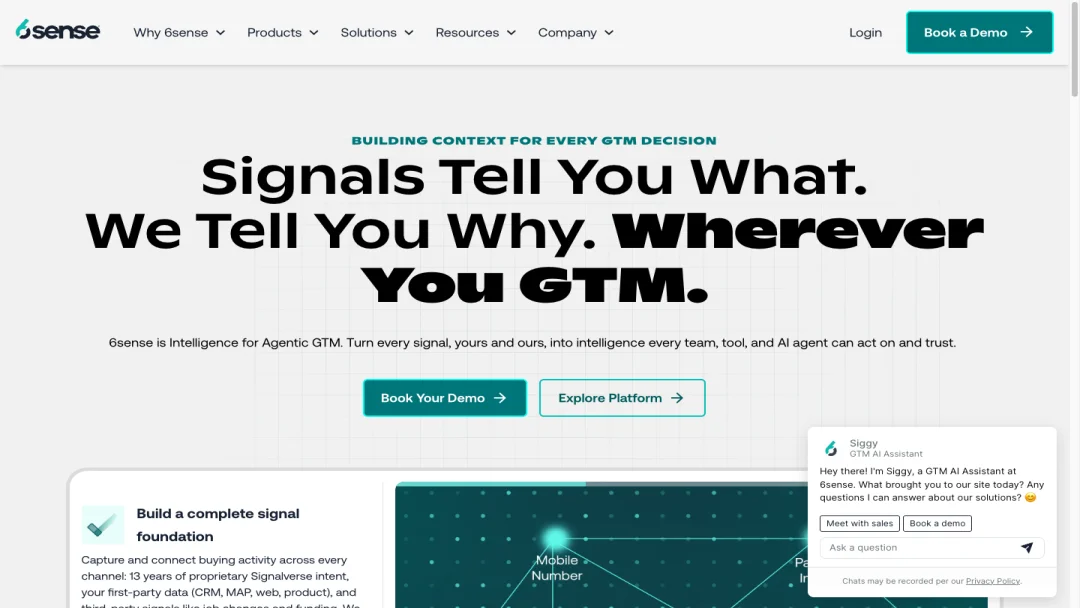
6sense sits in a different category from most of the tools above — it's an account-intelligence and predictive-intent platform rather than a contact-enrichment tool. Its AI models patterns in buying behaviour across the web (content consumption, research activity, competitive comparisons) and predicts which accounts are in-market, how far along they are, and which personas are involved. For enterprise ABM motions, it's the category leader.
Best for: Enterprise ABM teams that need predictive intent and account-level intelligence, not just contact data.
AI capabilities: Predictive intent modelling, account identification, buying-stage mapping, persona detection.
Pricing: Enterprise sales-led, typically six-figure annual contracts. Pricing checked: August 2026.
12. FullEnrich
Budget-friendly waterfall enrichment for teams that want coverage without the cost.
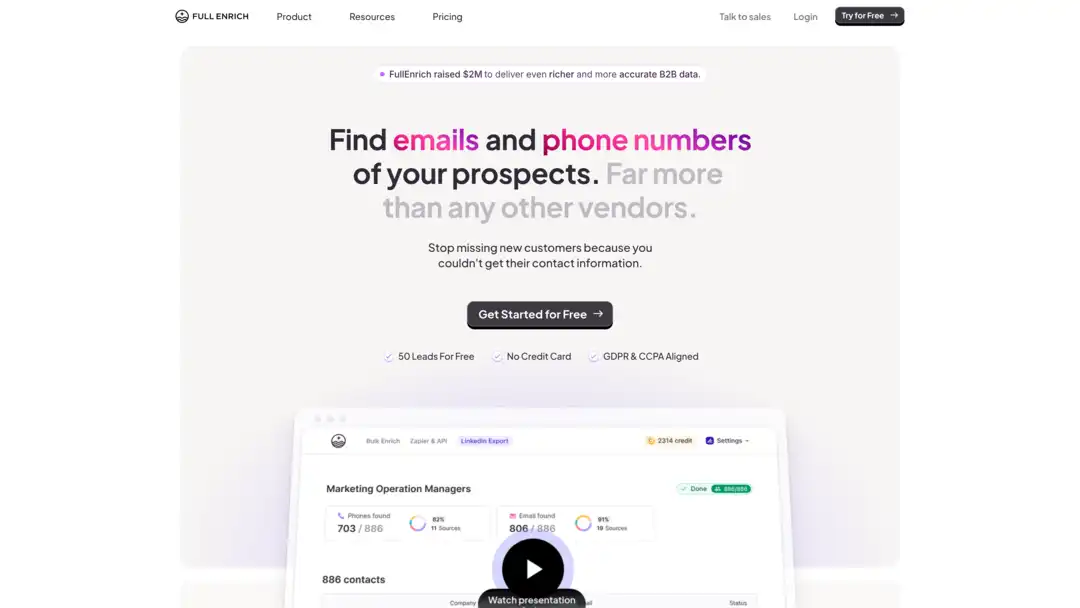
FullEnrich is a lightweight waterfall enrichment tool that queries multiple providers to maximise match rates, similar to Clay's core enrichment pipeline but without the workflow-building layer. For teams that need enrichment coverage on a budget and don't require custom scoring logic or AI research agents, it's the most accessible entry point into waterfall enrichment.
Best for: Teams that want multi-source enrichment coverage at a lower price point and don't need custom workflow logic.
AI capabilities: Waterfall enrichment across multiple providers, match-rate optimisation.
Pricing: Budget-friendly, credit-based. Pricing checked: August 2026.
Top rated AI sales prospecting tools
The popularity ranking above reflects market position and adoption. The top-rated ranking reflects something different: how well a tool actually performs once a buyer has it in production. We track this through a combination of customer review aggregates (G2, Capterra), depth interviews with RevOps leaders running each tool, and direct feature evaluation.
How we evaluated
Each tool is scored across six weighted criteria:
| Criterion | Weight | What it measures |
|---|---|---|
| Contact-data accuracy and freshness | 25% | Valid email rate, hard-bounce rate, direct-dial accuracy, data freshness |
| Enrichment depth and match rate | 20% | Percentage of records enriched, fields populated, match-rate consistency across personas |
| AI research and automation | 15% | Quality of AI agent output, personalisation snippet relevance, research-action accuracy |
| Workflow and integration flexibility | 15% | CRM integration depth, API quality, workflow-building capability, sequencer compatibility |
| Intent and buying signals | 10% | Signal coverage, signal-to-noise ratio, actionability of surfaced intent |
| Pricing and usability | 15% | Pricing transparency, predictable scaling, learning curve, user-review sentiment |
The 2026 top-rated picks
-
Clay — Highest combined score, driven by enrichment depth (waterfall match rates consistently outpace single-source databases) and AI research quality (Claygent's output is more actionable than competitors' AI assistants). Trade-off: steeper learning curve and unpredictable credit consumption.
-
Apollo.io — Highest customer-review scores in the SMB segment and the best value-for-price ratio of any all-in-one platform. Trade-off: enrichment depth lags behind dedicated waterfall tools, and database size doesn't guarantee ICP coverage.
-
ZoomInfo — Wins on data breadth, intent-signal coverage, and enterprise integration depth. For teams above 200 reps, no other platform matches the combination of data scale and signal intelligence. Trade-off: pricing opacity and contract complexity.
-
Cognism — Top-rated for EMEA coverage and phone-verified data. Teams selling into European markets consistently report higher connect rates with Cognism than with US-centric alternatives. Trade-off: less compelling for North America-only teams.
-
Cleanlist — Highest-rated among newer platforms, with strong early-user feedback on enrichment quality and AI-column utility. Trade-off: smaller review footprint means long-term reliability is less established than the top four.
Data quality: the terms that actually matter
Most prospecting tool comparisons blur together terms that mean different things. Understanding the distinctions is the difference between buying a tool that works for your ICP and buying one that works for the vendor's case study.
| Term | What it means | Why it matters |
|---|---|---|
| Match rate | Percentage of records for which the vendor finds any result | High match rate with low accuracy = lots of wrong data |
| Verification rate | Percentage classified as valid by a verification system | Verification systems have false positives; verified ≠ correct |
| Accuracy | Whether the returned person, company, title, phone, or email is actually correct | The only metric that ultimately matters — and the hardest to measure without a pilot |
| Freshness | How recently the record was confirmed | Contact data decays at 2–3% per month on average; faster in high-turnover industries |
| Deliverability | Whether an email can be delivered | Not the same as inbox placement or engagement — a delivered email can still land in spam |
Waterfall enrichment improves match rates by checking multiple sources, but it can also increase cost, latency, duplicate records, and compliance complexity. AI research adds context that fixed databases lack, but the output is only as good as the sources it queries. Neither approach guarantees accuracy — run a pilot on a representative sample of your actual ICP before committing to an annual contract.
What to test in a pilot
- Valid work-email rate
- Hard-bounce rate
- Direct-dial and mobile accuracy
- Duplicate rate
- Job-title normalisation
- Company-domain accuracy
- Parent/subsidiary matching
- International coverage for any non-US markets
- Data freshness (spot-check records against LinkedIn)
Common stack patterns
No single tool covers everything well. The most effective stacks combine tools by function:
| Stack pattern | Data layer | Enrichment layer | Engagement layer |
|---|---|---|---|
| SMB all-in-one | Apollo.io | Apollo.io (built-in) | Apollo.io sequences + dialer |
| Mid-market data-driven | Apollo.io or ZoomInfo | Clay | Instantly / Smartlead / Outreach |
| Enterprise ABM | ZoomInfo | Clay + 6sense (intent) | Outreach / Salesloft |
| Europe-first | Cognism | Clay or Cleanlist | Lemlist / Instantly |
| Budget-conscious | Lusha or UpLead | Cleanlist or FullEnrich | Instantly / Smartlead |
How to choose an AI sales prospecting tool
A buyer's framework, in the order that matters most.
1. Define your ICP and test against it
The single most important step and the one most frequently skipped. Every tool in this guide works well for someone's ICP; none works equally well for everyone. Run a test batch of 100–200 target accounts through your shortlisted tools and measure match rate, accuracy, and field completeness before making a decision.
If you're still building out your ICP or researching new markets, our roundup of AI market research tools covers platforms that can help identify and size your target segments.
2. Decide whether you need a database, an enrichment platform, or both
- Database-first tools (Apollo.io, Lusha, Seamless.AI, UpLead) give you contacts out of the box but are limited by the depth of a single data source.
- Enrichment platforms (Clay, Cleanlist, FullEnrich) pull from multiple sources for higher coverage but require you to bring or build your own lists.
- Enterprise intelligence platforms (ZoomInfo, Cognism, 6sense) add intent signals and org-chart depth for teams that need more than contact data.
Most teams above 50 reps end up with one from each category — a database for breadth and an enrichment platform for depth.
3. Weigh integration depth over feature count
An enrichment platform that integrates cleanly with your CRM and sequencer will save more time than one with more features that don't. Confirm the integration is native, bidirectional, and maintained by the vendor.
For teams building automated enrichment pipelines, our guide to AI workflow automation tools covers platforms that can orchestrate data flows between your prospecting stack and downstream systems.
4. Budget realistically
Credit-based pricing is the norm in 2026, which means costs are hard to estimate without a pilot. Phone-number reveals and AI research actions often incur separate charges beyond the base subscription. Budget a pilot month before committing to an annual contract.
5. Don't optimise for five years out
The category is moving fast. Pick a tool that fits your team size and ICP for the next 12–18 months. Switching costs are real but not prohibitive — the cost of using the wrong tool now is higher.
Quick selection guide
| Use case | Top recommendation | Strong alternative | Important caveat |
|---|---|---|---|
| Custom AI workflows & max enrichment coverage | Clay | Cleanlist or FullEnrich | Requires workflow design and credit management |
| All-in-one prospecting for SMBs | Apollo.io | Lusha or UpLead | Database size does not guarantee ICP accuracy |
| Enterprise signals, org depth, agent integrations | ZoomInfo | 6sense | Sales-led, expensive contracts |
| Europe / phone-first / compliance | Cognism | — | Validate coverage by country and persona |
| Accuracy-focused waterfall + simple AI research | Cleanlist | FullEnrich | Independent benchmark evidence is limited |
| Quick individual lookups | Lusha | — | A supplement, not a primary prospecting platform |
| CRM-native enrichment | HubSpot Breeze Intelligence | — | Best value depends on existing CRM |
| LinkedIn-centric prospect capture | LeadIQ | — | Browser-extension workflows have usage and policy constraints |
| Enterprise ABM and predictive intent | 6sense | Demandbase | Six-figure annual contracts |
| Budget waterfall enrichment | FullEnrich | Cleanlist | Fewer providers and no AI research agents |
The stack that wins
The best-performing stack is not the platform with the largest database. It is the combination that produces accurate records for a specific ICP, routes them to the right workflow, and gives sales teams enough context to act without creating excessive manual research or compliance risk. In 2026, that usually means waterfall enrichment for coverage, an AI research layer for context, and a sequencer for execution — each selected for the specific ICP, not for the vendor's total addressable market.
Methodology
This guide was researched, written, and reviewed by the LineZine editorial team in August 2026. Tools were selected from a starting list of 30+ platforms claiming AI capabilities for sales prospecting and lead enrichment, narrowed to the 12 covered here based on three criteria: documented AI capabilities specific to prospecting (not generic CRM or sales automation), meaningful market adoption in sales and RevOps teams specifically, and sufficient independent review volume to evaluate beyond vendor claims.
Each tool was evaluated against a weighted scorecard (detailed in the Top Rated section above), with scores informed by a combination of: direct feature testing against a standardised ICP across North American and European markets, a weighted average of G2 and Capterra customer reviews from the past 12 months (with recency adjustment), and depth interviews with RevOps leaders running these tools at scale.
Evidence standards: Database sizes, match rates, and accuracy percentages cited in this guide are vendor-reported unless we state otherwise. Where independent benchmark data is available, we reference it explicitly. The evidence note at the top of the guide applies to all tool entries.
The page is reviewed quarterly. The most recent review was completed on the publication date above. Material changes to any tool's capabilities, pricing, or security posture are reflected at the next quarterly review or sooner if the change is significant.
Affiliate disclosure: LineZine maintains affiliate relationships with several of the tools in this guide. Affiliate links do not affect rankings or evaluation scores — the editorial process and the affiliate-link layer are kept separate, with editorial decisions made before affiliate links are applied. We do not accept payment for inclusion or favourable placement.
Authorship and review: Editorial direction and final review by the LineZine editorial team. Tool evaluations were conducted by reviewers with backgrounds in B2B sales operations, revenue technology, and AI product evaluation.