The 2026 AI SEO Stack: Tools, Trackers, and Agents for the GEO Era
The complete 2026 AI SEO tool stack organized by job-to-be-done. Covers AI visibility tracking, content optimization, keyword research, technical SEO, and agentic workflows for the GEO era.
AI search did not replace SEO. It fragmented it.
By 2026, ranking on Google is still important, but it is no longer the only discovery channel that matters. Customers now ask ChatGPT, Perplexity, Gemini, Claude, Copilot, and Google's AI Overviews before they ever click a traditional result. That means modern SEO has three jobs: rank in search engines, get cited in AI-generated answers, and ship improvements quickly enough to keep up with both.
The AI SEO stack has changed around those jobs. The best tools are no longer just AI writing assistants. They now include AI visibility trackers, content optimization platforms, technical SEO crawlers, and agentic workflows that let teams use tools like Claude Code, Codex, and Cursor to execute SEO work directly in code and content systems.
This guide breaks down the 2026 AI SEO tool stack by job-to-be-done so you can choose the right tools for your team, budget, and workflow.
How We Picked These Tools
Every tool in this list had to meet three standards:
- It has a meaningful AI use case, not just AI in the marketing copy.
- It has a real adoption signal, whether through customers, funding, ecosystem usage, or industry relevance.
- It solves a distinct SEO job, instead of duplicating what another tool already does better.
For this 2026 update, several older AI SEO tools were removed because they were too narrow, too weakly differentiated, or no longer central to how SEO teams work. The biggest additions are AI visibility tracking tools and technical workflows for teams using AI agents.
Pricing changes often, especially in fast-moving AI categories, so treat the prices below as directional starting points and check each vendor before buying.
AI Visibility and Brand Tracking
If you add one new category to your SEO stack in 2026, make it AI visibility tracking.
Traditional SEO tools tell you where you rank in Google. AI visibility tools answer a newer question: when someone asks an AI system about your category, does your brand appear, and which sources does the model cite?
Profound
Profound is one of the category leaders in AI visibility tracking. It helps marketing teams understand how their brand appears across AI answer engines, compare visibility against competitors, and identify the sources influencing AI-generated recommendations.
Profound is best for larger marketing teams that need serious reporting on citation share, prompt coverage, sentiment, and competitive visibility. It is especially useful for brands treating AI search as a board-level growth channel rather than an experimental SEO add-on.
Best for: enterprise AI visibility and competitive tracking. Pricing: custom.
Otterly
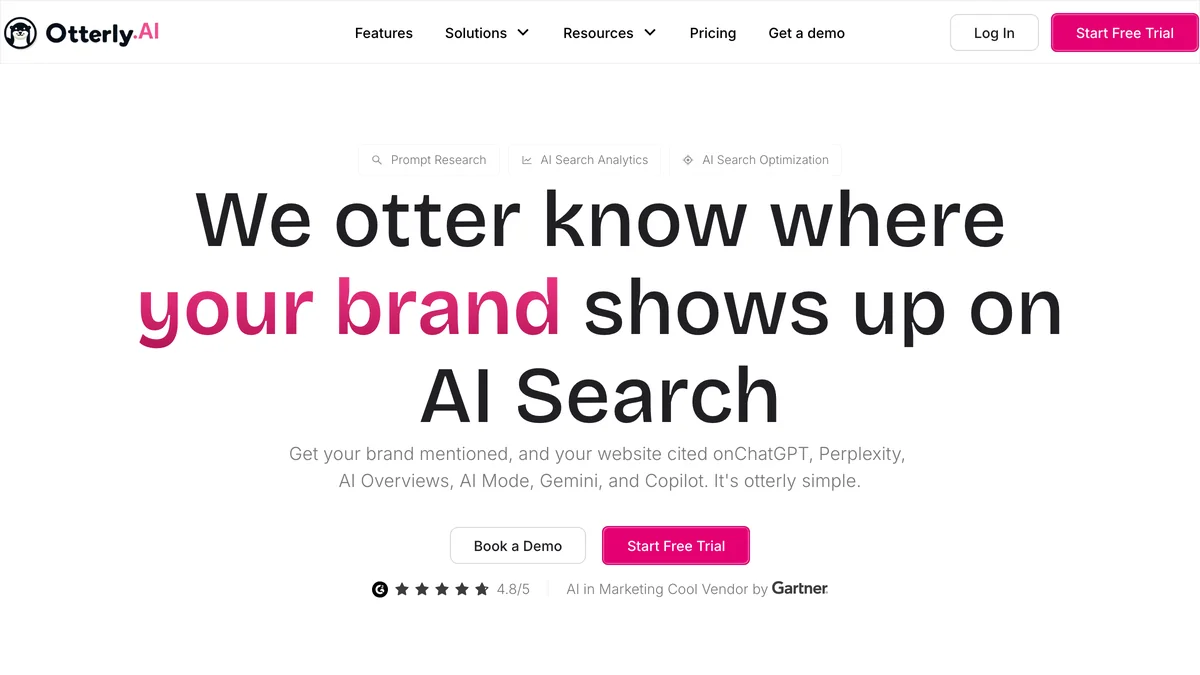
Otterly is a more accessible AI search monitoring platform for teams that want visibility data without an enterprise rollout. It tracks how brands appear across major AI search and answer platforms, monitors competitor mentions, and helps teams see which prompts they are winning or losing.
Otterly is a strong fit for mid-market teams, agencies, and content teams that want to start measuring AI visibility without building their own prompt-tracking process.
Best for: mid-market AI visibility monitoring. Pricing: paid plans typically start in the lower monthly SaaS range.
Peec AI
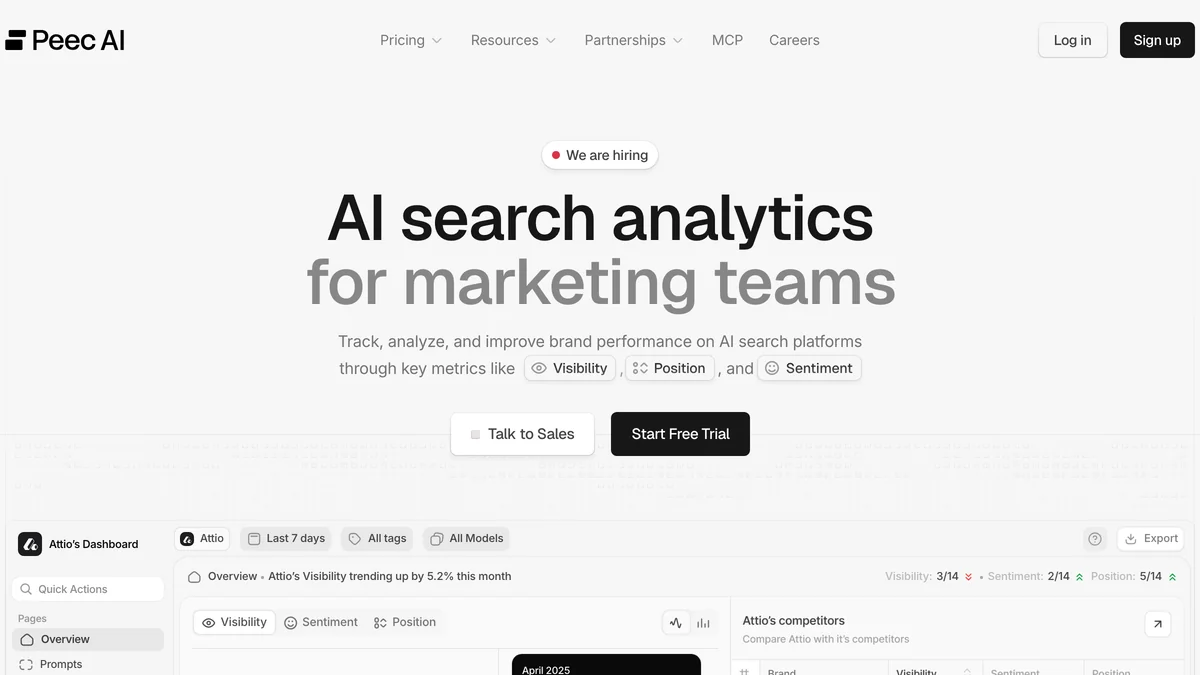
Peec AI is a strong option for global brands and multilingual teams. Its positioning is built around AI search visibility across markets, languages, and answer engines, making it more relevant for companies that need to understand how their brand appears outside a single English-language market.
Best for: multilingual AI visibility tracking. Pricing: paid plans start around the low hundreds per month.
HubSpot AI Search Grader
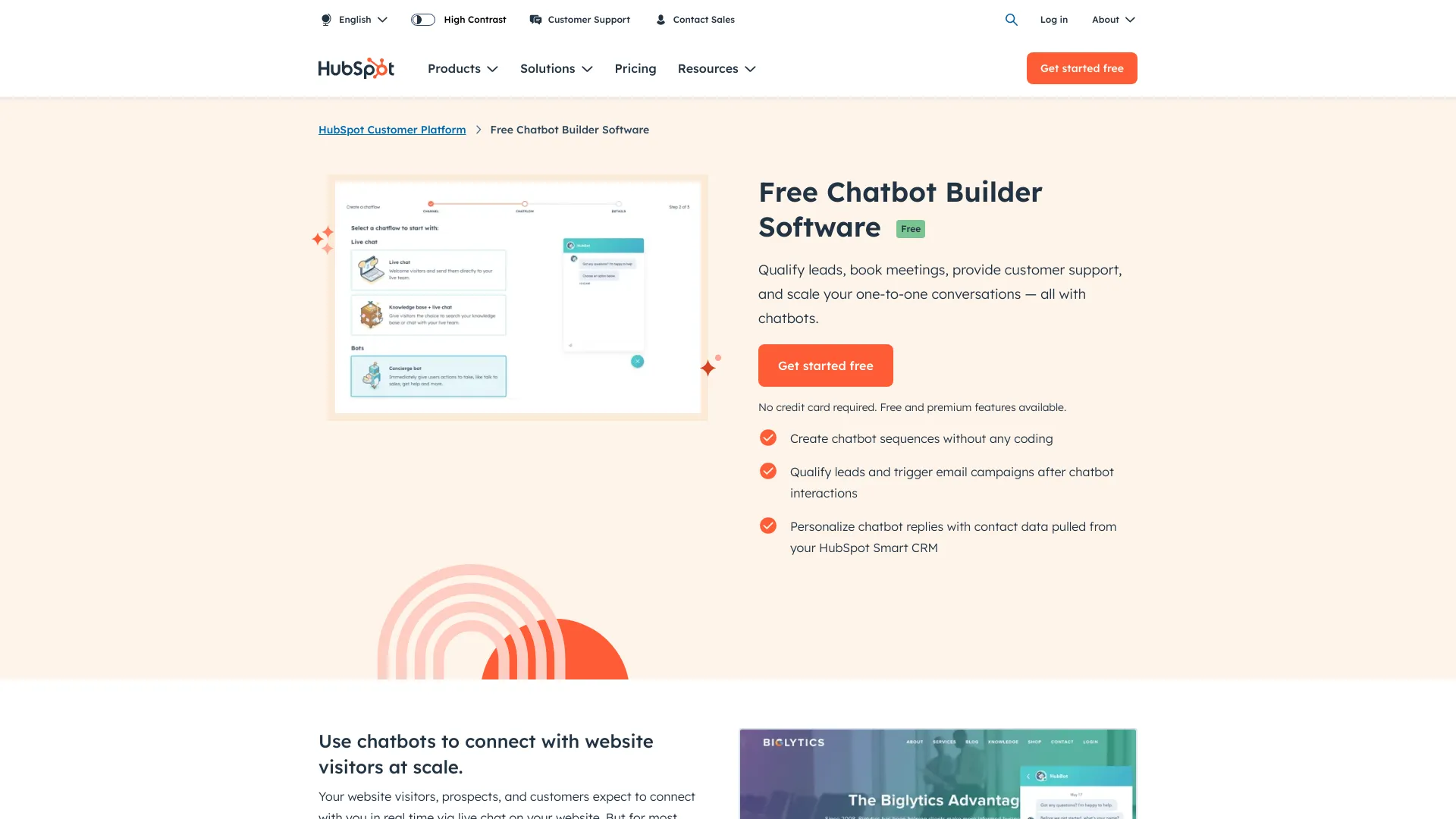
HubSpot's AI Search Grader is the easiest entry point for teams that have never measured AI visibility before. It is not a replacement for a full AI visibility platform, but it gives marketers a quick way to see whether their brand appears in AI search results and how they compare with competitors.
Use it as a free baseline before deciding whether you need a dedicated platform like Profound, Otterly, or Peec AI.
Best for: a free first AI visibility check. Pricing: free.
Adobe LLM Optimizer
Adobe LLM Optimizer is the enterprise option for companies already invested in Adobe Experience Cloud. It is designed to help large organizations measure and improve how their brand and content appear across AI-powered discovery experiences.
This is not the lightweight choice for small teams. It is built for enterprise marketing operations where AI visibility needs to connect with analytics, content workflows, and executive reporting.
Best for: enterprise brands using Adobe. Pricing: enterprise.
Content Creation and Optimization
The AI writer category has matured. In 2026, the winners are not the tools that can generate the most words. They are the ones that help teams create content that is useful, accurate, on-brand, and structured for both traditional search and AI answer engines.
ChatGPT
ChatGPT remains the default general-purpose AI tool for SEO workflows. Teams use it for ideation, outline development, content briefs, title testing, schema drafts, internal linking suggestions, and editorial rewrites.
Its value for SEO is not just writing. ChatGPT is most useful when teams turn repeatable workflows into reusable prompts or custom GPTs: keyword clustering, content gap analysis, product-page rewrites, metadata generation, and sales-led SEO research.
Best for: flexible SEO research, drafting, and workflow templates. Pricing: free and paid plans available.
Claude
Claude is especially useful for long-context SEO work. It can handle large content exports, site audits, editorial guidelines, and complex rewrite instructions in a single workflow.
Claude is a strong fit for teams that care about nuance, structure, and voice. It is also useful for technical SEO teams using Claude Code to inspect templates, generate structured data, and make code-level SEO improvements.
Best for: long-context editorial work and technical SEO workflows. Pricing: free and paid plans available.
Google Gemini
Gemini matters because it sits inside the Google ecosystem. It is useful for SEO teams working across Google Workspace, Search Console exports, keyword research, and AI Overview analysis.
Gemini is not always the strongest standalone writing tool, but it is strategically important for teams trying to understand how Google's AI surfaces, summarizes, and contextualizes information.
Best for: Google ecosystem workflows and AI Overview thinking. Pricing: free and paid plans available.
Jasper

Jasper has moved beyond generic AI writing into brand-controlled content operations. It is best for teams that need repeatable marketing content, campaign workflows, brand voice controls, and approval processes.
For SEO, Jasper is most useful when content production needs to scale without losing consistency. It is less useful for deep technical SEO or advanced AI visibility tracking.
Best for: branded content production at scale. Pricing: paid plans typically start around the per-seat SaaS range.
Frase
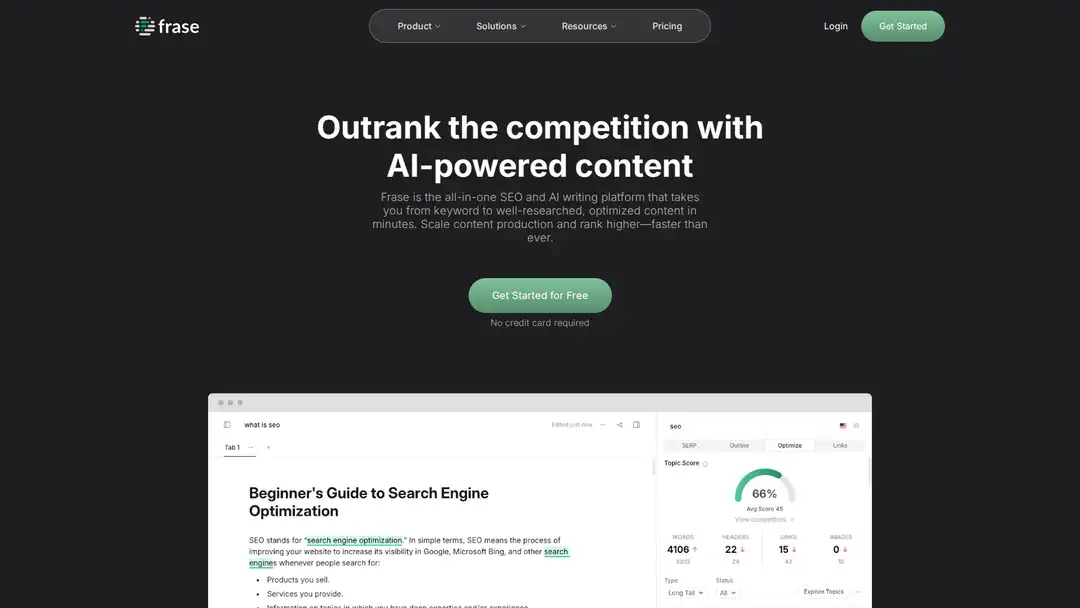
Frase remains a practical tool for SERP-driven content briefs and optimization. It helps teams understand what competing pages cover, build outlines, and improve topical coverage before publishing.
In 2026, Frase is most useful for teams that want a structured content workflow rather than a blank AI chat window. It fits well between keyword research and editorial production.
Best for: content briefs and SERP-driven optimization. Pricing: paid plans available.
NEURONwriter
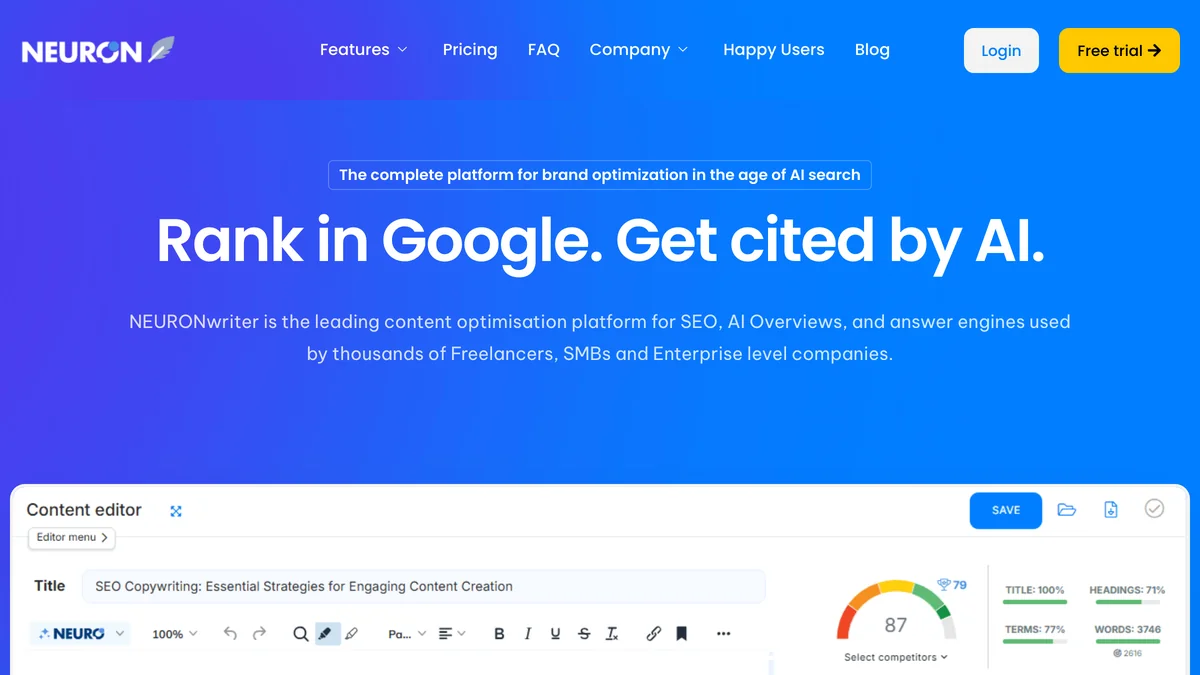
NEURONwriter is one of the stronger content optimization tools for teams focused on semantic SEO. It helps writers improve topical coverage, compare content against SERP competitors, and structure pages around the concepts search engines and AI systems are likely to associate with a topic.
It is a good fit for SEO-led content teams that want an optimization editor without the cost of an enterprise content platform.
Best for: semantic SEO and content optimization. Pricing: paid plans available.
Clearscope and MarketMuse
Clearscope and MarketMuse serve similar high-end content optimization use cases. Clearscope is known for a cleaner editorial workflow, while MarketMuse is stronger for content planning, topic authority, and portfolio-level strategy.
Both are best for teams that publish enough content to justify a premium optimization platform. Smaller teams may get similar value from Frase, NEURONwriter, or Surfer SEO.
Best for: enterprise content optimization and topic planning. Pricing: premium paid plans.
Writesonic
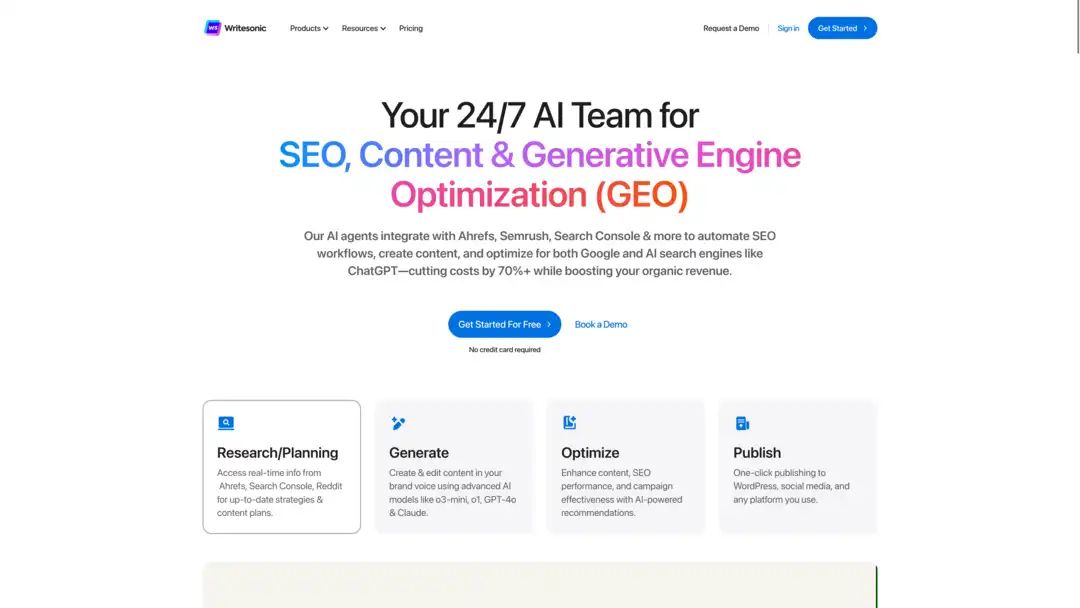
Writesonic helps with content and SEO at scale. It combines an AI article writer with SEO tools and supports publishing to multiple platforms.
Best for: marketing teams that need volume content production with SEO baked in. Pricing: free and paid plans available.
AltPage.ai
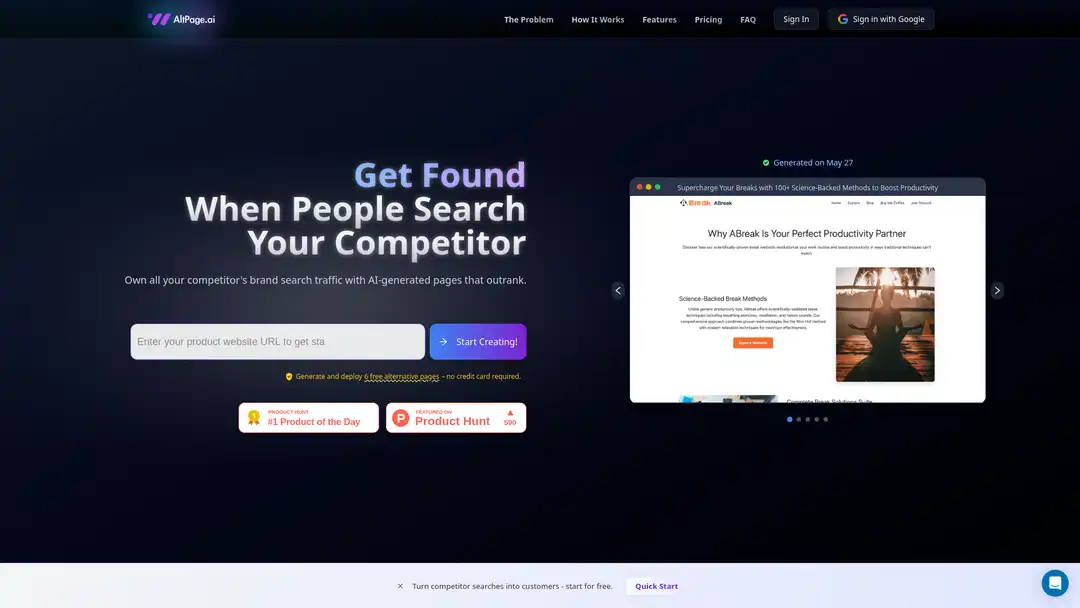
AltPage.ai creates comparison and programmatic landing pages from structured data. It is a strong fit for SaaS companies that need dozens or hundreds of landing pages targeting specific comparison queries.
Best for: programmatic landing pages and comparison content. Pricing: free tier available; paid plans from around 9/month.
Keyword, Competitor, and Backlink Research
Classic SEO platforms are still essential. The difference in 2026 is that the best ones now connect traditional SEO data with AI visibility, brand mentions, content gaps, and answer-engine discovery.
Semrush
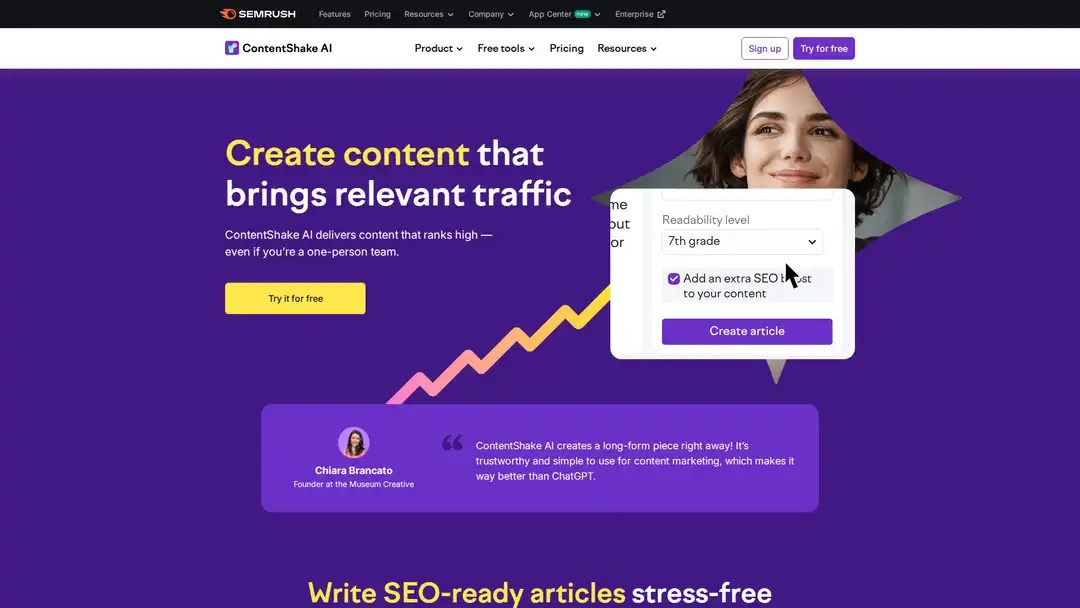
Semrush remains one of the strongest all-in-one SEO platforms. It covers keyword research, competitor analysis, site audits, backlink research, rank tracking, content workflows, and now AI visibility features.
Its biggest advantage is consolidation. Teams that already use Semrush can add AI visibility monitoring without buying a completely separate stack, making it a practical choice for in-house marketing teams and agencies.
Best for: all-in-one SEO plus AI visibility. Pricing: paid plans available.
Ahrefs
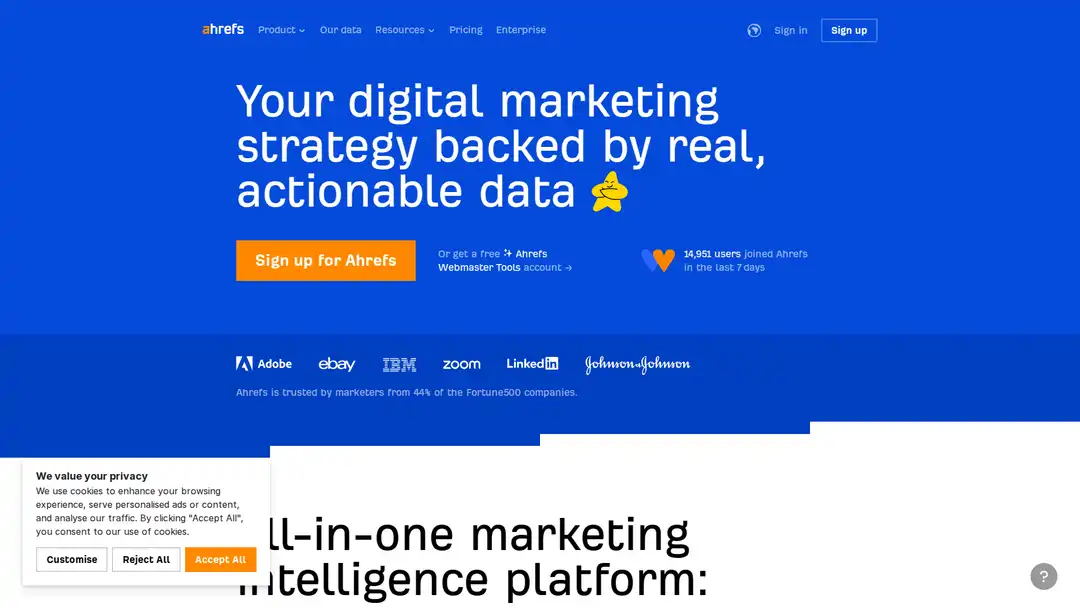
Ahrefs is still one of the best tools for backlink analysis and competitive research. Its newer AI visibility and brand-monitoring features make it more relevant for teams trying to understand how traditional SEO signals connect with AI search visibility.
Choose Ahrefs if backlinks, competitor content research, and organic search intelligence are central to your workflow.
Best for: backlink research, competitor analysis, and AI brand monitoring. Pricing: paid plans available.
SE Ranking
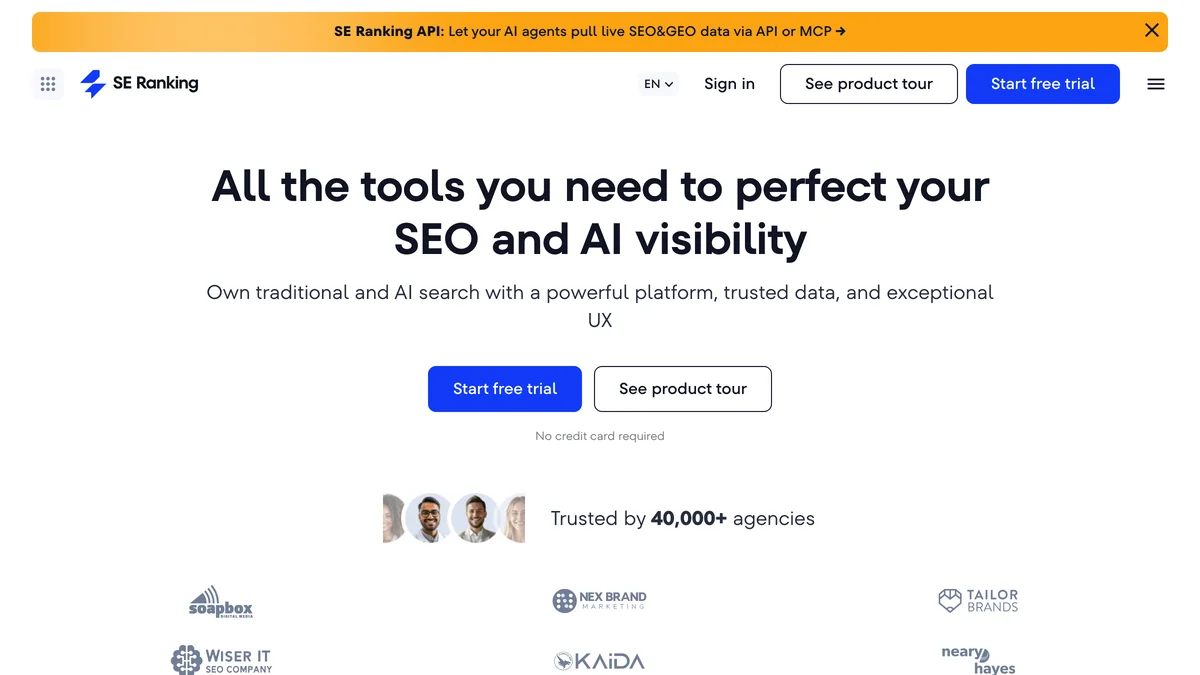
SE Ranking is a strong mid-market alternative to Semrush and Ahrefs. It combines rank tracking, keyword research, on-page SEO, competitor analysis, and AI visibility features at a more accessible price point.
It is especially useful for small teams, consultants, and agencies that need a broad SEO toolkit without enterprise pricing.
Best for: affordable all-in-one SEO. Pricing: paid plans available.
Perplexity
Perplexity is not a traditional SEO tool, but it has become useful for AI search research. Ask Perplexity about your category and study which brands, pages, and publications it cites. That gives you a quick view of how AI answer engines may frame the market.
Use it for competitive research, source discovery, and understanding how answer engines summarize your space.
Best for: AI search research and citation analysis. Pricing: free and paid plans available.
SEObot
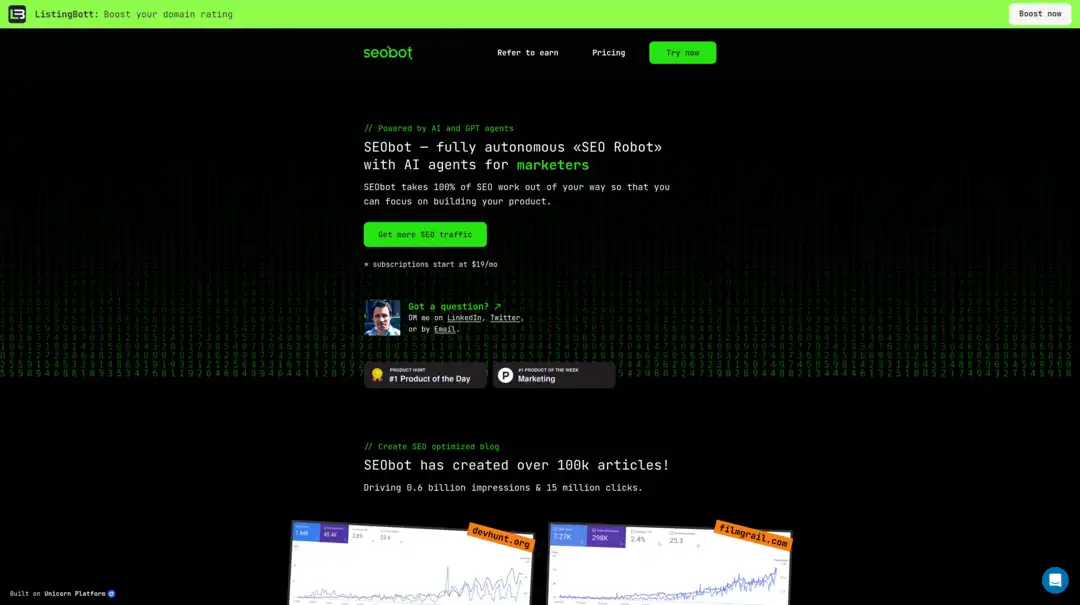
SEObot is an autonomous SEO content engine that handles keyword research, content creation, and publishing with minimal human input. It works across 50+ languages and is designed for teams that want hands-off blog SEO.
Best for: hands-off blog SEO automation. Pricing: paid plans available.
Technical SEO and Audits
Technical SEO has become a natural fit for AI-assisted workflows. Crawlers find the problems; AI agents help interpret and fix them. The best setup combines proven SEO tooling with faster execution.
Surfer SEO
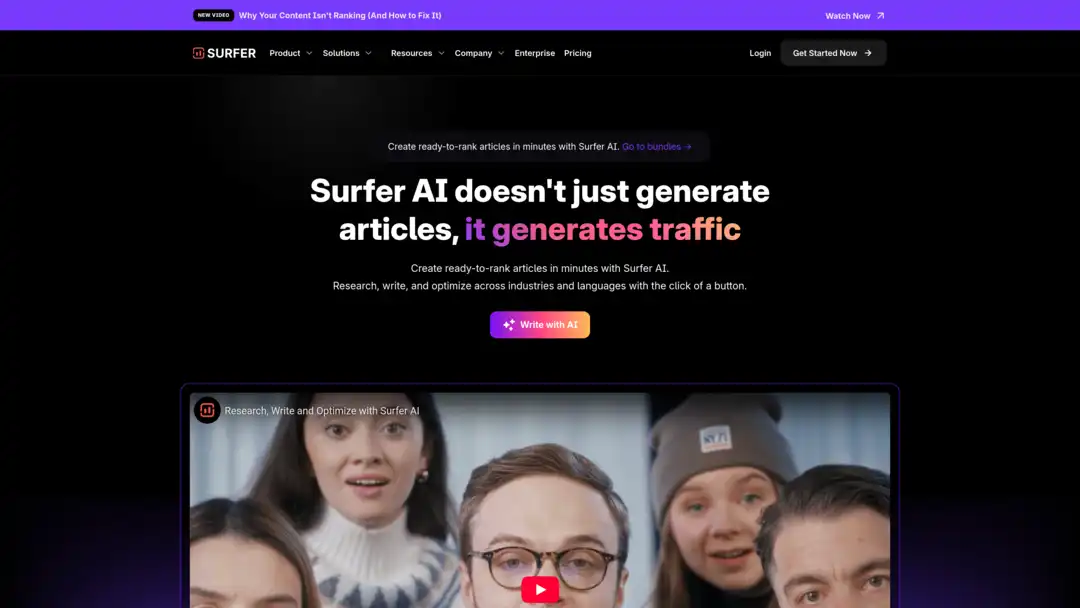
Surfer SEO is best known for on-page optimization and content scoring. It helps teams compare a page against top-ranking competitors and identify missing topics, structure issues, and content opportunities.
Surfer is a practical choice for content marketers who want fast on-page recommendations without managing a full enterprise SEO suite.
Best for: on-page optimization and content scoring. Pricing: paid plans available.
Screaming Frog SEO Spider
Screaming Frog remains the industry-standard technical SEO crawler. It is used for crawling sites, finding broken links, auditing metadata, reviewing redirects, checking canonicals, analyzing structured data, and diagnosing technical SEO problems at scale.
Recent AI and MCP-related workflows make Screaming Frog even more useful for technical teams that want AI agents to inspect crawl data and help prioritize fixes.
Best for: technical SEO crawls and audits. Pricing: free for small crawls; paid license for full use.
BrightLocal
BrightLocal is the local SEO pick for 2026. It covers local rank tracking, listings management, reputation monitoring, citations, and reporting for location-based businesses.
It is a better fit than broader enterprise listing tools for agencies, local service businesses, and multi-location brands that need practical local SEO visibility.
Best for: local SEO and multi-location visibility. Pricing: paid plans available.
For Technical Teams: Agentic SEO and Open Source
Most marketing teams do not need to run MCP servers or build their own SEO agents. But if your team has engineering support, agentic SEO is becoming one of the most interesting workflows in search.
AI coding agents such as Claude Code, Codex, and Cursor can inspect codebases, generate schema markup, build internal tools, update templates, run audits, and make technical SEO fixes directly in a development environment. For broader operational use cases, see these AI workflow automation tools.
These tools are best treated as a technical sidebar, not the main stack for a general marketing team.
Open SEO
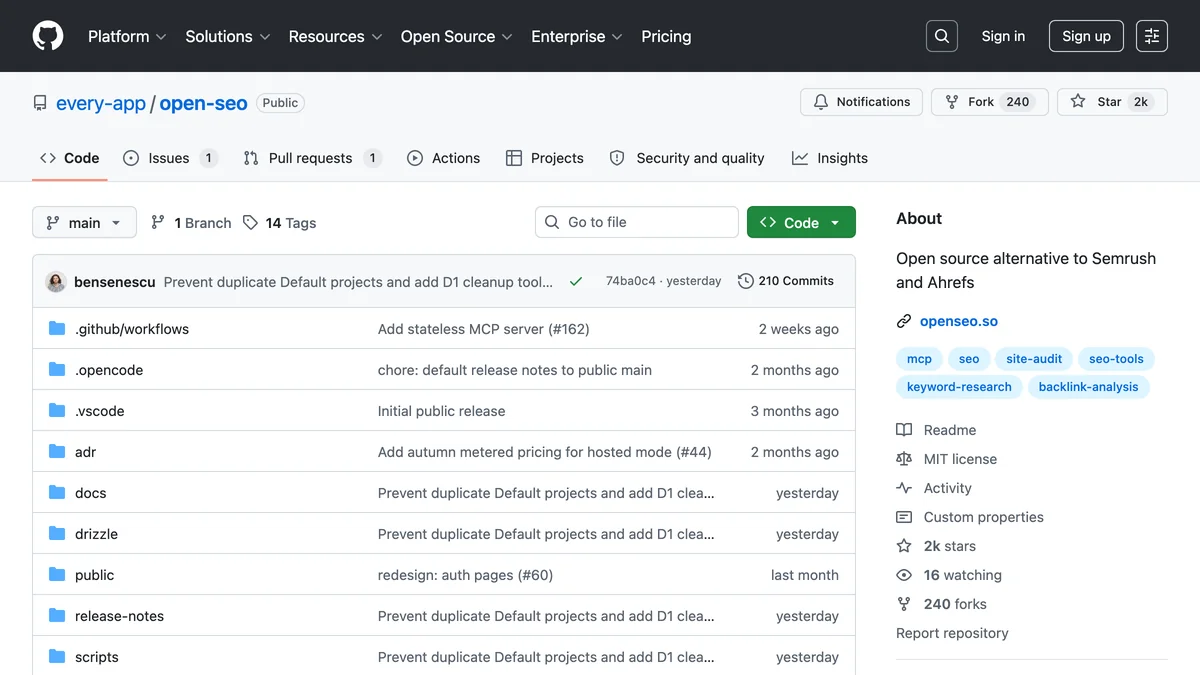
Open SEO is an open-source option for teams that want self-hosted SEO tooling instead of another SaaS subscription. It provides site audits, keyword research, and backlink analysis with a built-in MCP server for AI agent integration.
Best for: self-hosted SEO workflows.
Claude SEO and SEO/GEO Skills
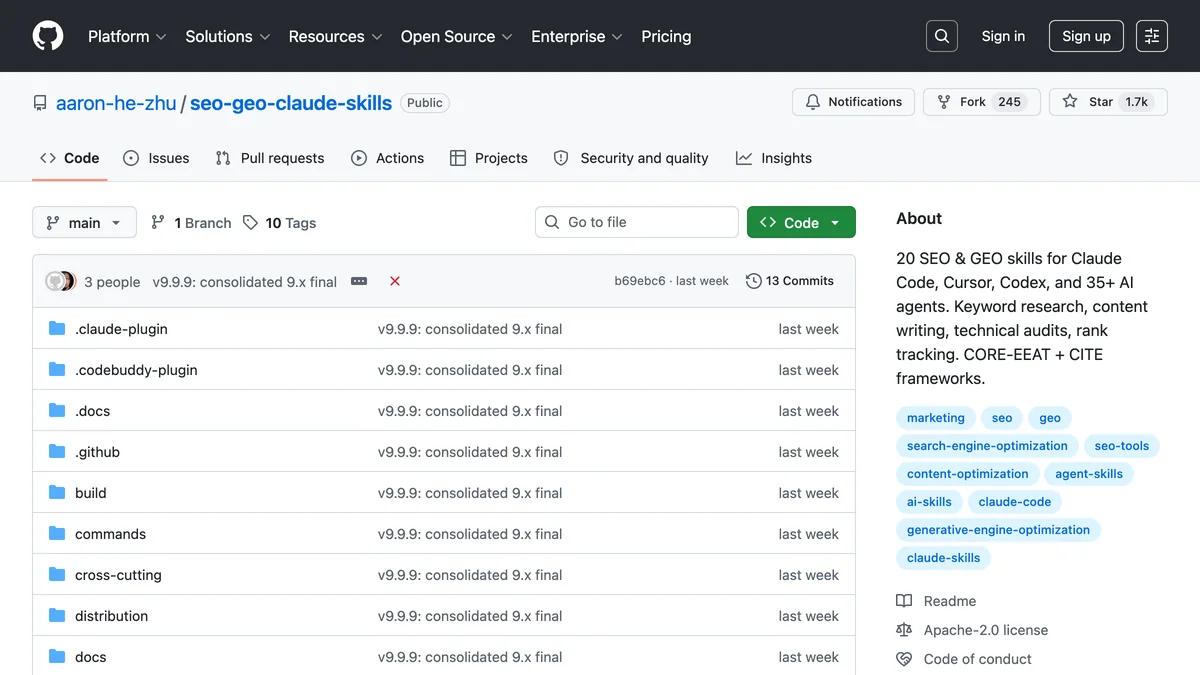
Claude SEO skills and related GEO skill libraries give technical marketers reusable workflows for keyword research, content audits, schema generation, AI visibility analysis, and technical SEO reviews. These run inside Claude Code, Cursor, Codex, and other AI coding agents.
Best for: teams using Claude Code or other agentic coding environments.
DataForSEO MCP Server
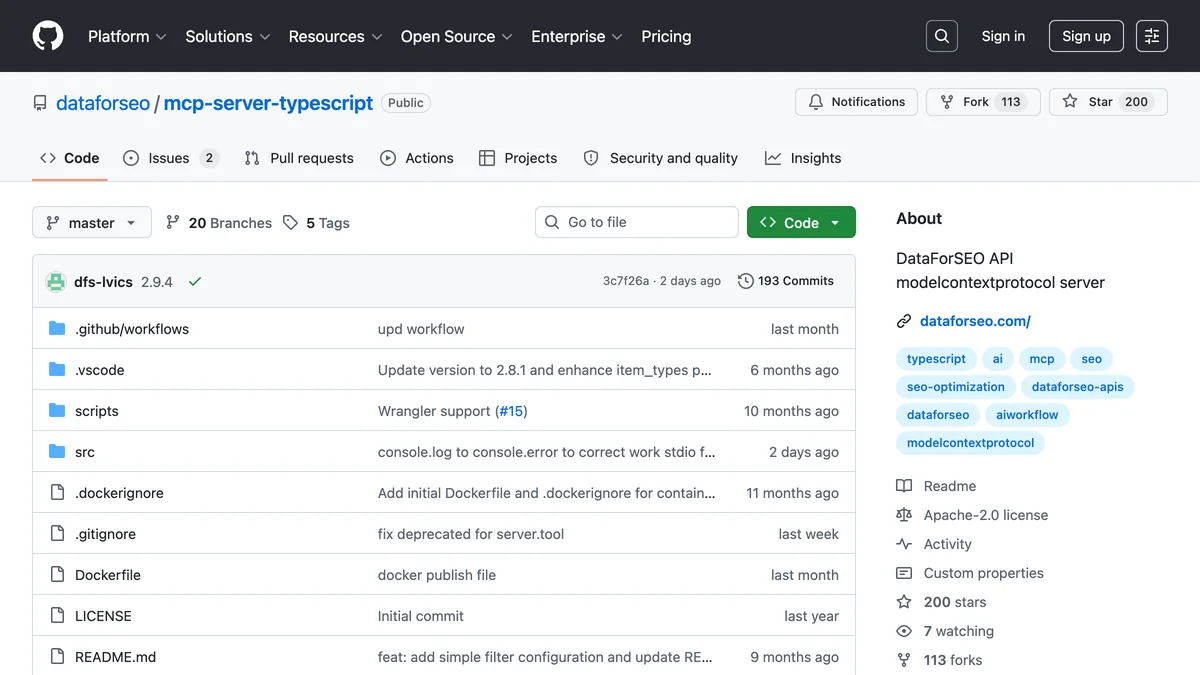
DataForSEO's MCP server lets AI agents connect to SEO data APIs through the Model Context Protocol. That means an agent can query keyword data, SERP data, and SEO metrics as part of a workflow.
Best for: programmatic SEO data access inside AI agents.
Search Console MCP
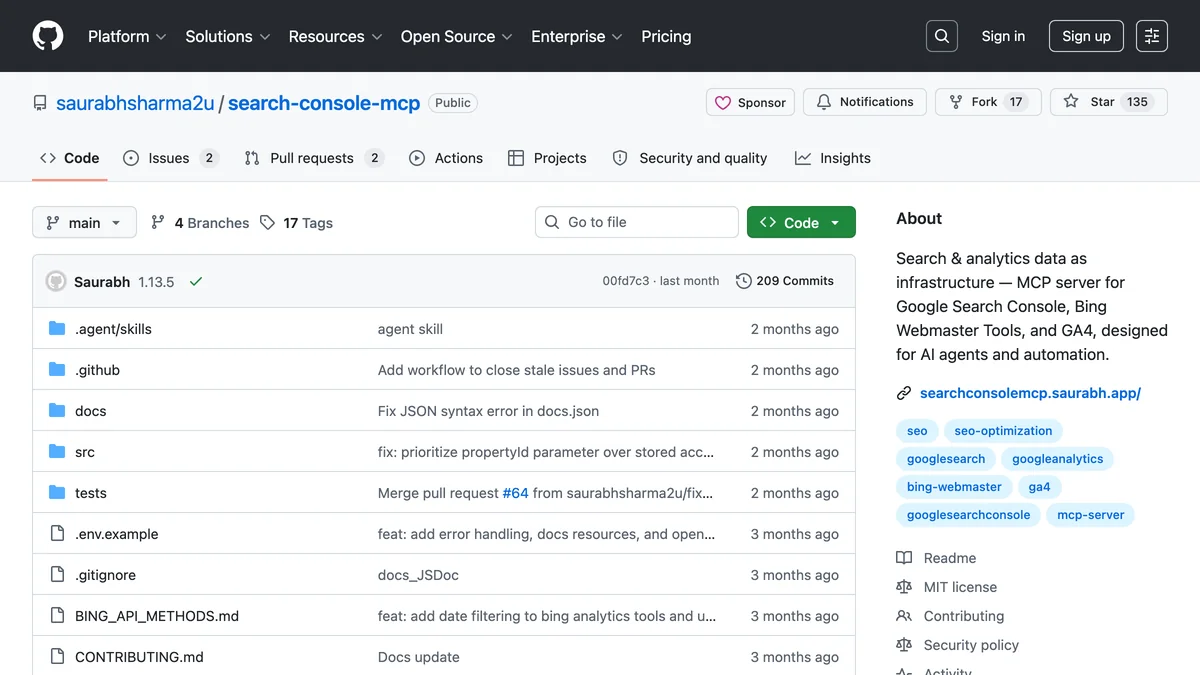
Search Console MCP workflows let AI agents interact with Google Search Console data, making it easier to analyze query performance, identify declining pages, and generate content or technical recommendations from real search data.
Best for: connecting AI agents to search performance data.
Lighthouse MCP Server
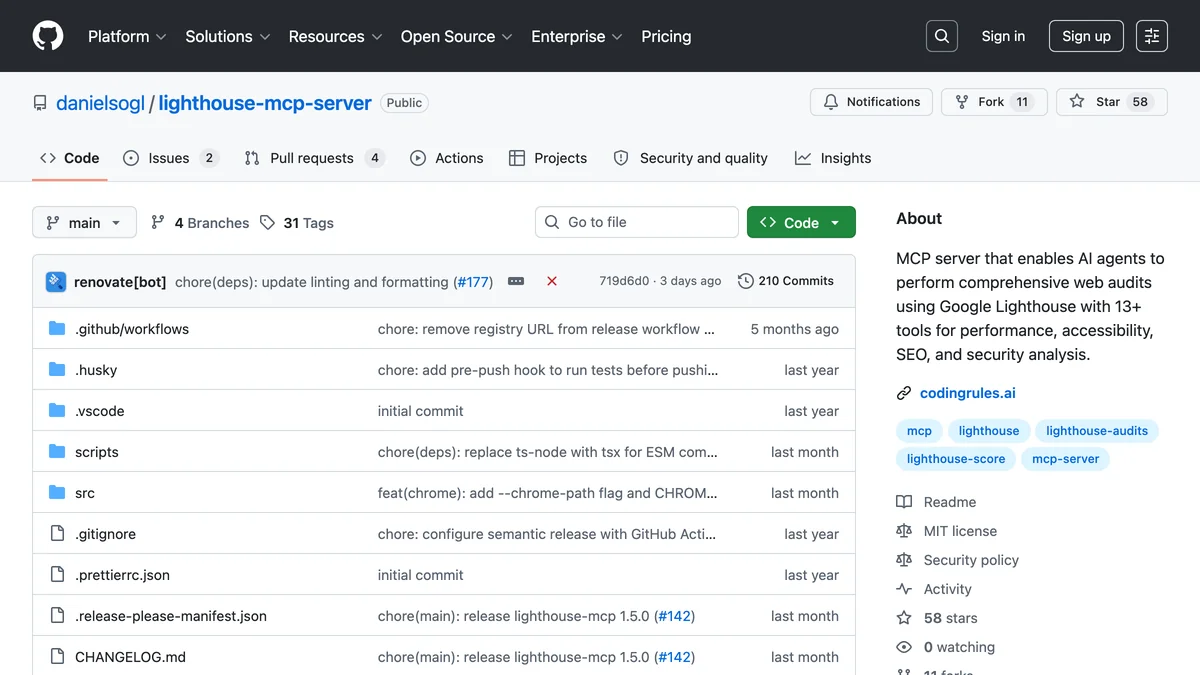
Lighthouse MCP workflows let an AI agent run performance, accessibility, SEO, and best-practice audits, then use the results to guide fixes.
Best for: agent-assisted technical audits.
How to Measure AI Visibility
Most teams adopting AI visibility tools get buried in new metrics. Start with the few that actually matter.
Citation Share
Citation share measures how often AI-generated answers cite your domain compared with competitors. This is the headline metric for AI visibility because it shows whether your content is being used as a source.
Prompt Coverage
Prompt coverage measures how many of your target prompts surface your brand at all. If you are invisible across the prompts your customers actually ask, citation share will not matter yet.
Share of Voice in AI Answers
Share of voice combines frequency and prominence. A brand mentioned early and repeatedly in an answer has more visibility than one buried in a single citation.
Engine Spread
Do not measure only one AI platform. Visibility across ChatGPT, Perplexity, Gemini, Claude, Copilot, and Google AI Overviews is more durable than visibility in a single engine.
The Metric to Treat Carefully: AI Traffic
AI referral traffic is useful, but it is a lagging and often messy signal. Analytics platforms still struggle to attribute all AI-driven discovery cleanly. Track citations, prompt coverage, and share of voice upstream; use traffic as supporting evidence.
A Simple AI Visibility Starter Workflow
If your team has never measured AI visibility before, start small:
- Build a list of 30 to 50 prompts your ideal customer might ask.
- Run a free baseline using HubSpot AI Search Grader or manual checks across ChatGPT, Perplexity, and Gemini.
- Compare your visibility against direct competitors.
- Identify which cited sources influence the answers.
- Update or create content that fills the gaps.
- Move to a paid visibility platform once the channel matters enough to track weekly.
The goal is not to game AI search. The goal is to become the source that answer engines consistently trust for your category.
How AI Coding Agents Are Changing SEO Execution
AI coding agents are changing the execution side of SEO. They are not replacing strategy, but they can dramatically speed up technical and content operations when used carefully.
Schema Markup at Scale
An AI coding agent can inspect page templates, generate structured data, and help apply schema markup across large sections of a site. This is especially useful for product pages, location pages, article templates, and programmatic SEO pages.
Programmatic SEO Pages
Teams can use a structured dataset, a page template, and a clear editorial prompt to generate large batches of landing pages. The agent can help create the templates, wire up the content, and check for obvious duplication or formatting issues.
The bottleneck should still be quality control. AI can accelerate production, but human review is what keeps programmatic SEO from becoming thin content.
Technical SEO Fixes
An agent connected to crawl data, Lighthouse reports, or Search Console exports can help identify issues, open the relevant files, suggest fixes, and rerun checks. This is where tools like Screaming Frog, Lighthouse, and MCP workflows become especially useful.
This is still a developer-led workflow. Marketing teams should partner with engineering rather than trying to run agentic SEO in isolation.
Pricing and Use-Case Matrix
| Tool | Primary use case | Best for | Pricing model | GEO support |
|---|---|---|---|---|
| Profound | AI visibility tracking | Enterprise teams | Custom | Native |
| Otterly | AI visibility monitoring | Mid-market teams | Paid SaaS | Native |
| Peec AI | Multilingual AI visibility | Global brands | Paid SaaS | Native |
| HubSpot AI Search Grader | Free AI visibility check | Any team | Free | Native |
| Adobe LLM Optimizer | Enterprise AI visibility | Adobe customers | Enterprise | Native |
| ChatGPT | SEO research and drafting | Any team | Free and paid | Indirect |
| Claude | Long-context editorial and technical workflows | Any team | Free and paid | Indirect |
| Gemini | Google ecosystem AI workflows | Any team | Free and paid | Indirect |
| Jasper | Brand-controlled content production | Marketing teams | Paid SaaS | Indirect |
| Frase | Content briefs and optimization | Content teams | Paid SaaS | Yes |
| NEURONwriter | Semantic content optimization | SEO content teams | Paid SaaS | Yes |
| Clearscope / MarketMuse | Enterprise content optimization | Larger teams | Premium SaaS | Yes |
| Semrush | All-in-one SEO and AI visibility | In-house teams and agencies | Paid SaaS | Native |
| Ahrefs | Backlinks, competitors, and AI brand monitoring | SEO teams | Paid SaaS | Native |
| SE Ranking | Affordable all-in-one SEO | Small teams and agencies | Paid SaaS | Native |
| Perplexity | AI search research | Any team | Free and paid | Native |
| Surfer SEO | On-page optimization | Content marketers | Paid SaaS | Yes |
| Screaming Frog | Technical SEO crawling | Technical SEOs | Free and paid license | Via AI/MCP workflows |
| BrightLocal | Local SEO | Local businesses and agencies | Paid SaaS | Indirect |
Quick-Pick Stacks
Solo Founder or Small Site
Start with HubSpot AI Search Grader, ChatGPT, SE Ranking, and Frase or NEURONwriter. This gives you basic AI visibility, general AI support, keyword research, and content optimization without enterprise spend.
In-House Marketing Team
Use Semrush or Ahrefs as the core SEO platform, add Otterly or Profound for AI visibility tracking, and use NEURONwriter, Surfer, or Clearscope for content optimization. Add Screaming Frog if technical SEO is a recurring need.
Agency or Enterprise Team
Use a full SEO platform such as Semrush or Ahrefs, a dedicated AI visibility platform such as Profound, an enterprise content optimizer such as Clearscope or MarketMuse, and technical workflows built around Screaming Frog, Search Console, and AI coding agents.
Final Takeaway
The 2026 AI SEO stack is not just about writing faster. It is about being visible wherever customers ask questions.
That means your tools need to cover three jobs: ranking in traditional search, getting cited in AI-generated answers, and shipping content and technical improvements quickly. The teams that win will not be the ones that publish the most AI content. They will be the ones that become the most useful, trusted, and easily cited sources in their category.