Unlocking Success with AI Customer Service Chatbots in 2025
Unlock success with AI customer service chatbots in 2025. Discover how these tools enhance efficiency, personalization, and customer satisfaction across platforms.

Imagine having a virtual assistant that's available 24/7, capable of handling routine queries while freeing up your human agents to tackle more complex issues. With AI chatbots, you not only improve response times but also ensure that every customer receives the attention they deserve.
As businesses increasingly adopt this technology, understanding how AI chatbots can transform customer service is essential for staying ahead in the competitive landscape.
If nothing on this list suits your needs, visit our AI Tool Directory for more options.
How to Choose AI Chatbots for Customer Service
Selecting the right AI chatbot for your customer service involves careful consideration of various factors. Focus on these key aspects to make an informed decision:
- Functionality
Evaluate the features each chatbot offers. Prioritize essential functionalities like natural language processing (NLP), multi-channel support, and customizability. These tools enhance interaction quality and user experience.
- Ease of Use
Assess the user interface. Choose a chatbot that provides a simple and intuitive design, making it easy for both your team and customers to navigate.
- Integration Capabilities
Check how well the chatbot integrates with your existing customer relationship management (CRM) systems and other software. Seamless integration ensures that data flows smoothly across platforms, enhancing overall service efficiency.
- Multilingual Support
Consider chatbots that offer multilingual capabilities. This feature allows you to cater to a diverse customer base, ensuring effective communication regardless of language barriers.
- Scalability
Look for a chatbot solution that scales with your business. As your customer base grows, the chatbot should handle increased volumes without compromising performance.
- Customization Options
Find a chatbot that offers customization to align responses with your brand voice. Personalization helps enhance customer engagement and satisfaction.
- Analytics and Reporting
Review the analytics features provided. A robust reporting system enables you to track customer interactions, identify trends, and measure the effectiveness of your chatbot.
- Customer Support
Investigate the level of customer support offered by the chatbot provider. Responsive support can significantly impact the smooth implementation and ongoing use of the chatbot.
By concentrating on these aspects, you'll streamline the selection process and ensure your chosen AI chatbot effectively meets the demands of your customer service operations.
Trends in AI Chatbots for Customer Service
AI chatbots are evolving rapidly, driven by the demand for enhanced customer experiences and operational efficiencies. You can observe several key trends that are reshaping this technology:
- Hyperpersonalization: Chatbots are moving beyond basic interactions. They leverage customer data and AI to offer tailored product suggestions and unique solutions, ensuring each engagement feels personal.
- Voice-Activated Chatbots: With the rise of voice assistants like Siri and Alexa, chatbots increasingly understand and respond to spoken language. This trend makes interactions more natural and accessible for users.
- Omnichannel Integration: Chatbots now operate seamlessly across different platforms, including websites, social media, and messaging apps. This integration guarantees consistent support no matter how customers reach out.
- Empathetic AI: Current chatbots are being designed with emotional intelligence. By recognizing and reacting to customer emotions, they handle inquiries with empathy, enhancing resolution rates and customer satisfaction.
- Predictive Analytics and Proactive Support: Advanced chatbots analyze past interactions and behavior patterns to anticipate customer needs. They can offer solutions proactively, addressing issues even before customers articulate them.
- Emotionally Intelligent Responses: Enhanced natural language processing (NLP) enables chatbots to discern the emotional tone of inquiries. This capability leads to more contextually relevant engagements, improving overall satisfaction rates.
- Voice-Enabled Conversational Interfaces: Integrating voice recognition allows users to interact naturally with chatbots, aligning with the growing presence of voice-assisted devices in daily life.
- AI Ethics and Bias Mitigation: Implementing ethical AI practices is crucial. As organizations deploy chatbots, they focus on mitigating biases to ensure fairness and reliability in customer interactions.
These trends reflect the shift towards increasingly sophisticated and empathetic AI chatbots in the customer service sector. By staying informed about these advancements, you can leverage the latest technology to enhance your customer service operations effectively.
What is an AI Chatbot for Customer Service?
An AI chatbot for customer service is an automated tool designed to simulate human-like conversations with customers. This technology uses artificial intelligence to answer common questions, provide product information, and assist with troubleshooting.
AI chatbots operate 24/7, eliminating long wait times typical with traditional customer support. They can handle multiple inquiries simultaneously, ensuring customers receive prompt assistance whenever they need it. Examples of typical queries include How do I add more users? or What is your pricing?.
AI chatbots employ natural language processing (NLP) to understand and respond to user queries conversationally. They can provide personalized experiences by remembering previous interactions. For instance, if you've asked for product recommendations before, an AI chatbot can suggest options tailored to your preferences.
These chatbots can either function based on predefined rules or utilize advanced machine learning algorithms for more complex interactions. Rule-based bots provide responses according to specific command inputs, while AI chatbots learn from each customer interaction, improving responses over time. This adaptability enhances customer satisfaction by ensuring more accurate and relevant support.
Overall, AI customer service chatbots free human agents from routine inquiries, allowing them to focus on more intricate issues. They significantly improve response times and the overall efficiency of customer service operations.
Features of an AI Chatbot for Customer Service
AI chatbots for customer service come equipped with several key features that enhance their functionality and effectiveness.
- Instant Response: AI chatbots provide real-time responses to inquiries, significantly reducing customer wait times and boosting satisfaction. These immediate answers help improve the overall customer experience.
- Scalability: AI chatbots manage an increasing volume of inquiries without requiring additional resources. This scalability allows you to respond efficiently during peak times, ensuring no customer feels neglected.
- Cost Efficiency: By automating routine inquiries, chatbots reduce the workload on your human agents. This automation lowers operational costs associated with customer support and reallocates agent resources to more complex issues.
- Personalized Experiences: AI chatbots tailor interactions based on customer data. They provide personalized recommendations and support that enhance the customer journey, making each communication feel unique and relevant.
- Multilingual Support: Many AI chatbots offer multilingual capabilities, enabling you to serve a diverse customer base. This feature ensures that customers receive assistance in their preferred language, increasing accessibility and satisfaction.
- Integration Capabilities: AI chatbots can integrate seamlessly with existing platforms and tools, such as CRMs and help desk software. This integration allows for a unified approach to customer service, centralizing interactions and ensuring consistency.
- Analytics and Reporting: AI chatbots provide insights through analytics and reporting tools. You can track customer interactions, analyze engagement trends, and identify areas for improvement to enhance service quality continuously.
- Continuous Learning: AI chatbots utilize machine learning algorithms to improve their responses over time. By training on past interactions, they evolve and offer more accurate answers, leading to increased efficiency and effectiveness.
These features collectively enhance customer satisfaction and streamline operations, making AI chatbots an invaluable asset for modern customer service strategies.
Top 11 chatbots for customer service
Explore these top chatbots to enhance your customer service operations with AI-driven solutions that offer efficiency and effectiveness.
1. Zendesk AI Chatbot

Zendesk's AI Chatbot integrates seamlessly with existing tools to optimize customer support processes. It employs an AI tool to detect customer intent, providing instant answers from the knowledge base. Pricing starts at $55 per agent per month. Visit Zendesk website
2. Intercom Fin AI Agent

Intercom's Fin AI Agent uses a mix of large language models to resolve up to 50% of customer questions instantly. It streamlines customer interactions across various channels, making support more efficient. Pricing starts at $39 per month. Visit Intercom website
3. Ada

Ada offers hyperpersonalization capabilities by harnessing customer data. It automates customer interactions with a user-friendly interface, allowing businesses to engage effectively. Pricing options are customized based on business needs. Visit ADA website
4. Freshchat (by Freshworks)

Freshchat provides an omnichannel experience, enabling businesses to connect with customers across multiple platforms. Its advanced features include AI-driven engagement tools for proactive support. Pricing starts at $17.87 per month. Visit Freshchat website
5. Tidio Lyro

Tidio Lyro combines live chat services with AI to improve customer interaction. It supports multilingual conversations, catering to diverse audiences and ensuring effective communication. Pricing starts at $89 per user per month. Visit Lyro website
6. Drift

Drift focuses on converting visitors into customers through chatbot-driven interactions. Its AI technology engages users in real time, guiding them toward making purchase decisions. Pricing starts at $49 per month. Visit Salesloft website
7. Zoho SalesIQ

Zoho SalesIQ delivers powerful analytics and reporting features, enhancing customer service insights. It integrates effectively with various Zoho applications and third-party tools. Pricing starts at $15 per month. Visit SalesIQ website
8. Sprinklr AI Chatbot

Sprinklr's AI Chatbot excels at managing omnichannel engagement, providing consistent support across platforms. It leverages customer sentiment analysis to tailor interactions accordingly. Pricing starts at $20 per month. Visit Sprinklr website
9. Gorgias

Gorgias specializes in e-commerce support, automating common tasks while providing a personalized experience. It integrates with various e-commerce platforms to streamline operations. Pricing starts at $60 per month. Visit Gorgias website
10. HubSpot Chatbot
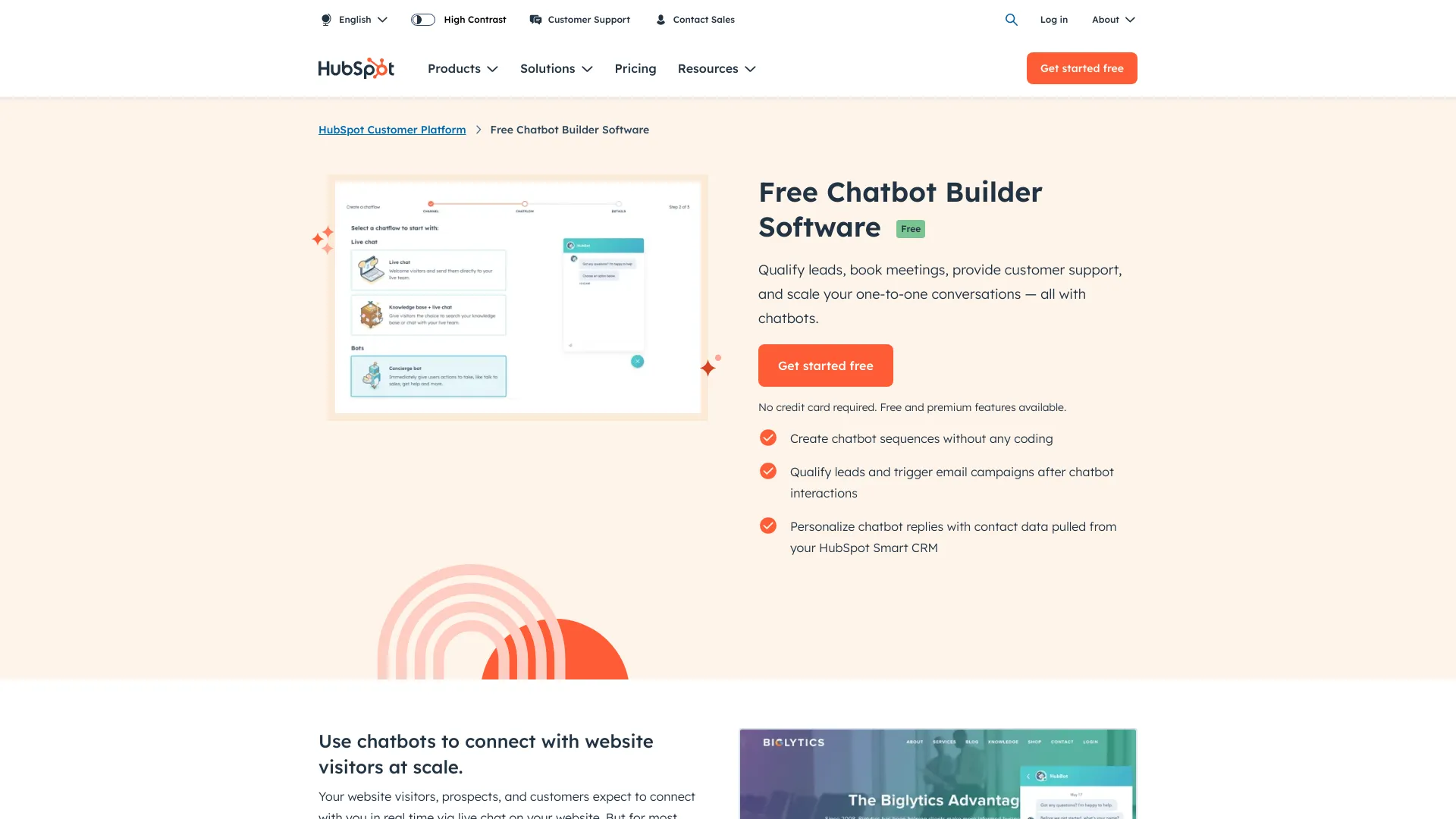
HubSpot's Chatbot enhances customer engagement through its free live chat option. It allows users to automate responses while maintaining a personal touch across customer interactions. Pricing options are available for paid plans starting at $800 per month. Visit Hubspot website
11. Meya

Meya offers a developer-friendly platform to build custom chatbots tailored for specific business needs. It combines integration capabilities with machine learning to adapt to user inquiries efficiently. Pricing is customized based on requirements. Visit Meya website
Best practices for using customer service bots
Utilizing customer service bots effectively enhances user experience and operational efficiency. Follow these best practices to leverage the full potential of AI chatbots.
1. Personalize interactions for stellar experiences
Personalization significantly boosts customer satisfaction. Use AI chatbots to analyze customer data and tailor interactions based on past behavior and preferences. This ensures relevant product recommendations and creates a sense of connection, making customers feel valued.
2. Embrace and use a multichannel approach
Adopt a multichannel approach for seamless interactions. Ensure your chatbot is integrated across various platforms such as websites, mobile apps, and social media. This allows customers to engage on their preferred channel, ensuring consistency and accessibility in support.
3. Build interactive FAQs
Create interactive FAQs to address common inquiries efficiently. Design chatbots capable of guiding customers through questions with clear answers. This proactive engagement reduces frustration, enabling quicker resolutions and providing immediate assistance without human intervention.
4. Use rich text and content
Incorporate rich text and multimedia content in your chatbot's responses. Rich text like bold, italics, and bullet points enhances readability. Additionally, utilize images, links, and videos to provide comprehensive information, making conversations more engaging and informative for users.
5. Streamline routine tasks for efficiency
Automate routine tasks to boost efficiency within your customer service team. Leverage chatbots for handling inquiries like order tracking, appointment scheduling, and basic troubleshooting. This frees your human agents to focus on complex issues, improving overall service quality.
6. Continuously learn and improve
Implement mechanisms for continuous learning and improvement within your chatbot. Regularly analyze interaction data to identify patterns and areas for enhancement. Training your chatbot with updated information and feedback helps refine its responses, ensuring it evolves alongside customer expectations.
Key Takeaways
- Efficiency and Availability: AI customer service chatbots provide 24/7 support, significantly reducing wait times and enhancing customer satisfaction by delivering instant responses to inquiries.
- Personalization: These chatbots utilize customer data to offer tailored interactions, improving engagement and ensuring a more personalized experience during each customer interaction.
- Multichannel Integration: AI chatbots can operate seamlessly across various platforms, including websites, social media, and mobile apps, ensuring consistent support regardless of how customers reach out.
- Scalability and Cost-effectiveness: Chatbots can efficiently manage increasing volumes of inquiries, allowing businesses to grow without proportionately increasing costs associated with human resources.
- Continuous Improvement: Leveraging analytics and machine learning, chatbots adapt and improve over time, becoming more effective in addressing customer needs based on past interactions.
- Best Practices for Implementation: Incorporate personalized interactions, adopt a multichannel strategy, and automate routine tasks to maximize the benefits of AI chatbots while maintaining a balance with human support.
Deliver excellent customer service with AI chatbot technology
Embracing AI customer service chatbots can significantly elevate your business's support capabilities. By integrating these advanced tools into your operations, you can enhance customer satisfaction and streamline processes. With features like instant responses and personalized interactions, chatbots allow you to meet rising customer expectations effectively.
As you navigate the landscape of AI chatbots, focus on selecting the right solution that aligns with your specific needs. Keep an eye on emerging trends and best practices to ensure you're maximizing the benefits these technologies offer. Ultimately, leveraging AI chatbots can position your business for success in a competitive market while delivering exceptional customer experiences.